
The House Above Avignon
By my third trip up the fifty-two stairs with another fifty-pound suitcase, it dawned on me that it might have been useful if the stairs had been mentioned in the Airbnb description. The steps weren’t consistent. Some were full, others barely counted as steps at all. My body kept correcting for what my eyes expected, and I started letting the suitcase bounce off my thigh, using it to push forward, willing it to the top.
From the road below, none of this was visible. The house sat above it all, tucked into the hills outside Avignon, looking so calm and unbothered it almost felt like it was daring you to ask why it was hiding. You couldn’t see the stairs from the street. You couldn’t see the landing or the patio, or the fact that getting anything up there required repetition and attention. All of that was concealed by distance and angle, which felt intentional.
Just before the driveway, before the stairs made themselves known, there was the lavoir.
It sat at the edge of the road where the pavement gave up and the hillside took over; a low stone structure built around a steady trickle of water that had been coming out of the ground for a very long time. Officially, it was called Lavoir Lou Lavadou. Of course, I had no idea what that meant. Apparently, it was the kind of place people had stopped at for centuries. At first because they needed water. Not convenience, survival. This was dry Provence. That water had mattered.
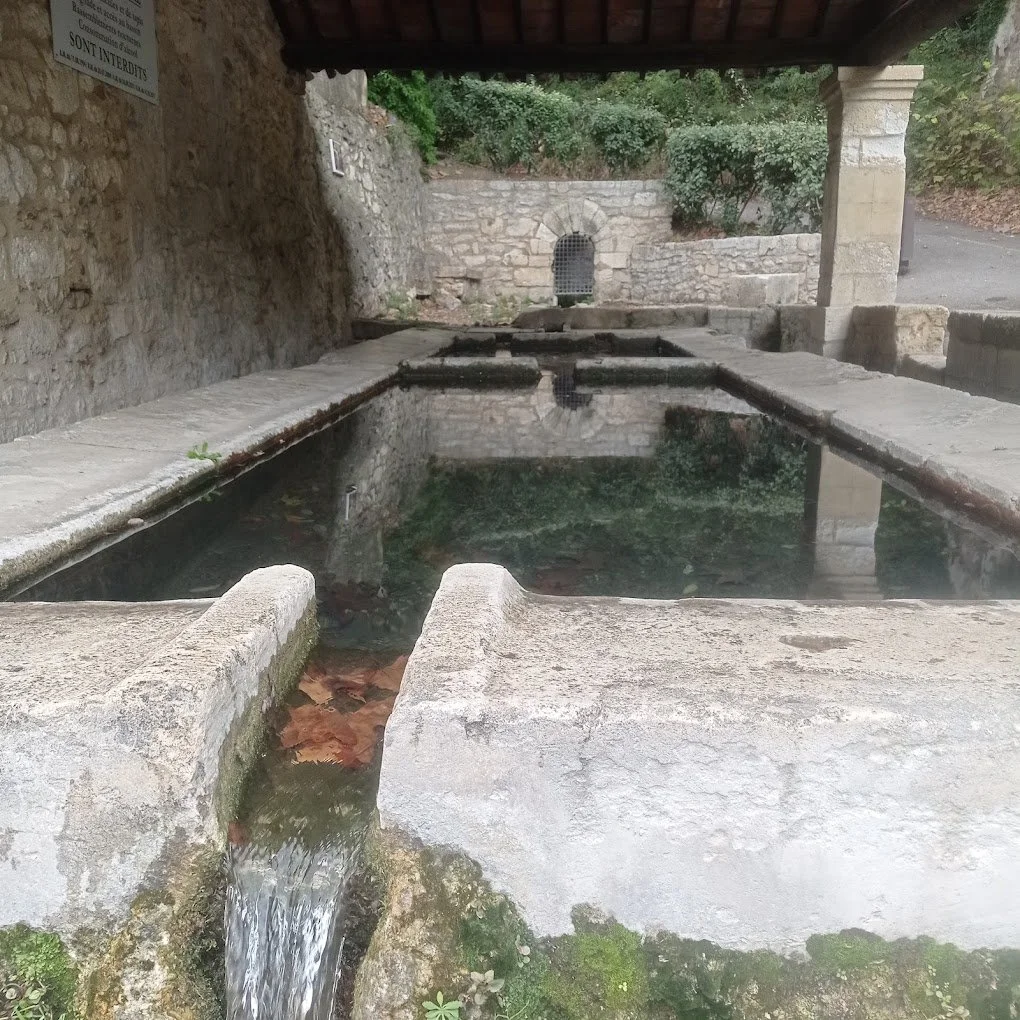
Later, people stopped because they were passing through. Soldiers. Pilgrims. Anyone moving with purpose and no guarantee they would make it.
Now cyclists leaned their bikes against the stone. Walkers filled bottles, rinsed their hands, cooled their wrists. The function shifted, but the place didn’t. It worked quietly, without signage or explanation, and had been doing so long enough that no one expected it to announce itself.
Immediately next to the house was the entrance to what amounted to a state park. A public trail started just to the right of the driveway and climbed the hill, meaning there was a steady parade of walkers, hikers, dogs, and passing conversations that were not yours.
The driveway was long and narrow, about three hundred yards, with a sheer drop on the left and a rocky hillside pressing in from the right. There was nowhere to turn around.
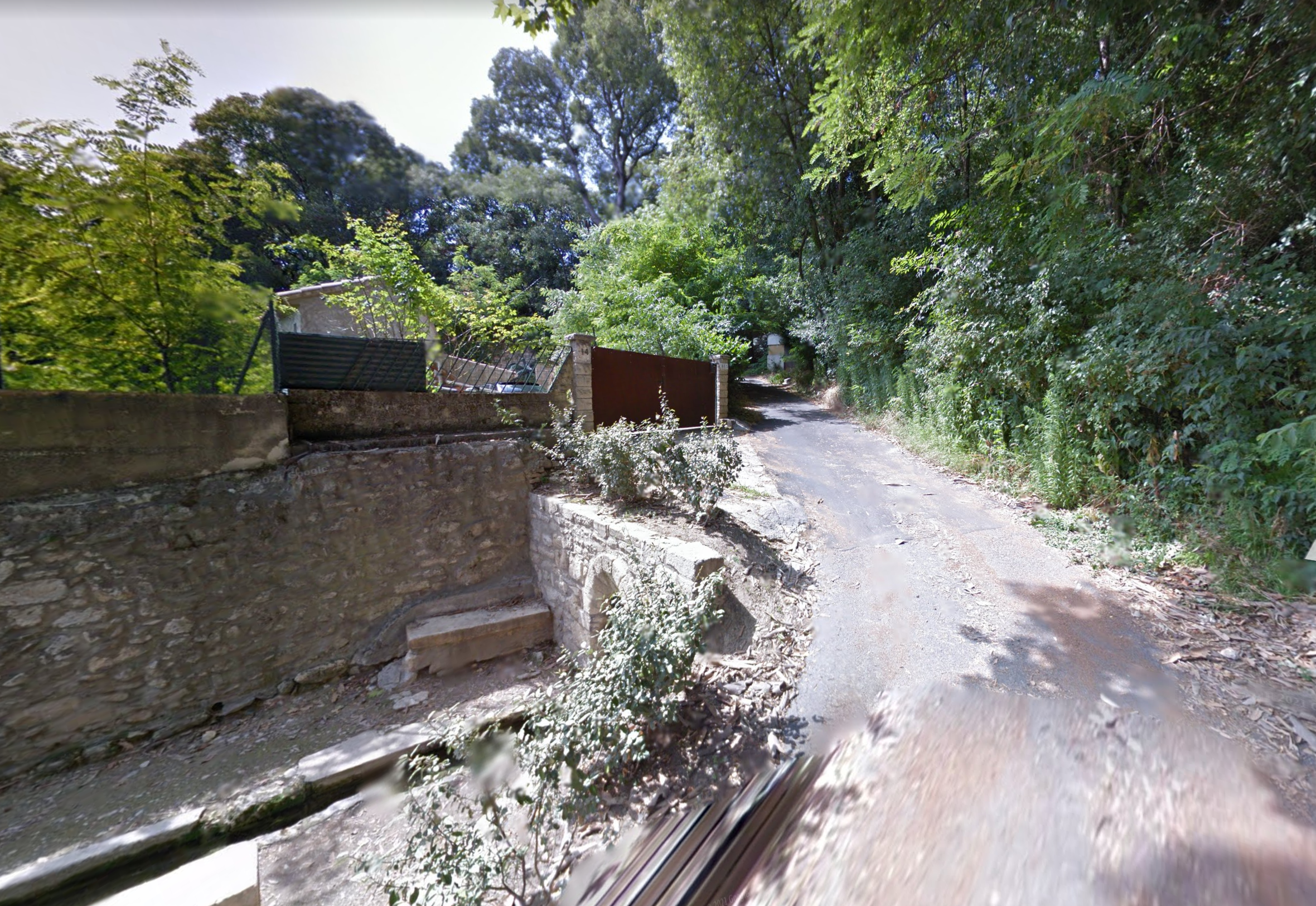
As I drove up it for the first time, it occurred to me, not dramatically, just as a fact, that every time I left I would have to back out. Scratch the rocks on the right or slide toward the culvert on the left. Those were my options. On the road I worried about gendarmes. Here I had to worry about getting out of the driveway.
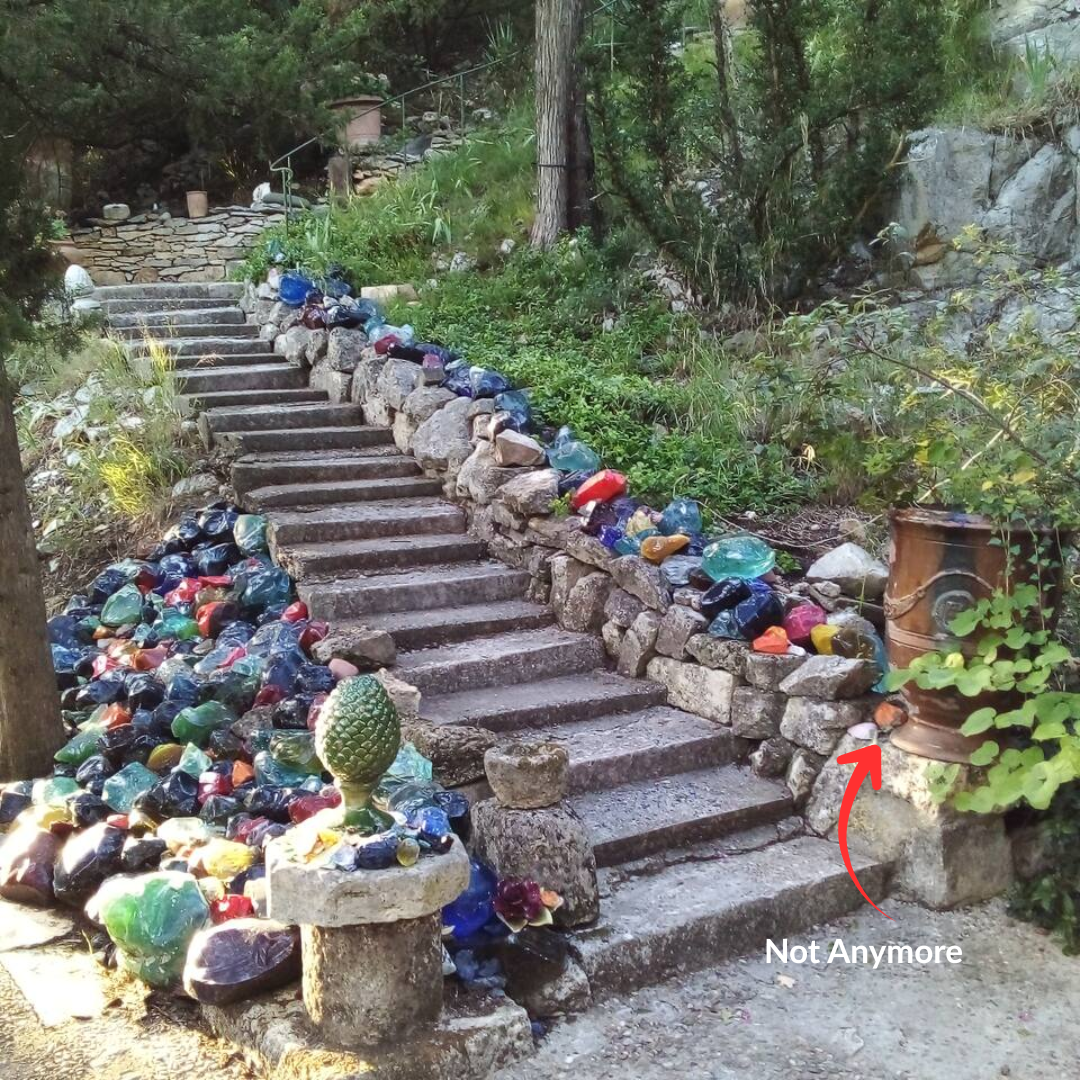
The stairs confirmed it. Fifty-two of them, and not the good kind. Not the uniform, predictable steps that agree with how your brain expects to climb. Half of them were short four-inch half-steps that tricked your foot into landing early. Fifteen of those in a row. Then a hard right turn. Twenty more steps, some normal, some not. Then another hard left. You could now see the top, straight up until you reached the patio. But the last four steps were freakishly taller that the previous forty-eight.
At this point we were still on the road. Four giant suitcases containing most of what we owned. Two PCs. Screens. And the junk we were already starting to collect. Lining the stairs, both going up and coming down, were enormous pieces of pottery. Some intact. Some shattered. Glass and ceramic arranged like an art installation and a minefield at the same time.
This was not a vacation rental. It was someone’s idea of a life. An artist’s house, it turned out, and not just in theory. It was her house. Her actual residence.
Inside, it became clear the place hadn’t been prepared for guests so much as temporarily abandoned by its owner. She was leaving for the month to visit friends and, incidentally, earn about three thousand euros while she was gone. I had seen this before in France. Owners put their own homes on Airbnb the way you leave a fishing line in the water. If someone bites, you go away for a bit and enjoy the windfall. There is no long-term commitment and no real reconfiguration of your life around hospitality. Just a pause, a payout, and then you return.
But when it is someone’s primary residence, the equation changes. People don’t clean their own houses the way professionals do. Familiarity dulls the eye. Comfort disguises neglect. You stop seeing the corners where dust gathers. You stop noticing the odd remnants of recently cooked meals. You forgive the things that would make a guest pause. The house wasn’t dirty exactly, but it wasn’t prepared for strangers carrying their entire lives uphill either.
I could smell the scenario early. This wasn’t about hosting so much as the upside, and that became clear when we talked about the air conditioning. Mid-conversation she remembered something she wanted to show me. We went into the back of one of the bathrooms, where it was dark enough to need a flashlight. Behind a panel, tucked out of sight, was the electrical meter. She marked the number and explained that if we ran the air conditioning she would charge us the going rate for the electricity. Twenty-five centimes per unit. If we used four hundred units, I would owe her a hundred euros at the end of the month.
What she did not say, but what was obvious the moment she finished, was that I was paying for all the electricity in the house that month. The lights. The pool. Everything humming quietly while she was gone. Back home this would have been folded invisibly into the price. Here it was itemized, metered, and personal. This wasn’t hospitality. It was accounting, which felt, in its own way, very French.
Some places here charge you for sheets. Others tell you to bring your own towels. That’s always the tell for me. Is this your home or is this a business model that charges for oxygen. Spirit Airlines logic. You want a seatbelt, that will be twenty-five dollars.
By the time we were done talking about the meter, I was ready for her to leave. She wasn’t mean. There was simply too much personality friction for me to spend much time talking to her without starting to inventory my exit options. I had been here before. Denise could handle that. She always could.
Her personality completed the picture. She was the inverse of me, the kind of artist who watches more than she speaks, the kind who evaluates. I’ve never been comfortable around people like that. They always feel like they’re grading you silently, measuring your worth against a scale you didn’t agree to use.
In their version of the story, they are the contemplative ones, the observers, the depth. In mine they aren’t hostile, just unreadable. Faces that don’t react. Pauses that feel longer than they probably are. My one-liners tend to amuse me. They do very well in the right rooms. In the wrong rooms they disappear completely, like they were never said. Good material. Wrong crowd. This was one of those rooms.
Somewhere in the middle of the walk-through, she mentioned there was also an Algerian artist, —maybe a hermit— living in a lean-to down below on the property. She said it casually, as if that is perfectly normal at an Airbnb. We would never see him, she promised, but she used him to relay messages, drop things off, communicate needs. A ghost intermediary. I was wondering if I was supposed to leave him food scraps periodically. It was unclear.
Finally, she was ready to head out. She said she was going to spend the month in the Vaucluse. We could call her if we needed anything.
I knew it. We were her windfall.
After she was gone, we started to settle in and explore the house for the month. Where were things. Where was the pool I couldn’t wait to jump into. And, more urgently, where was Sully going to do his business. I was not going up and down those stairs all day.
I did anyway.
One night, not long after we had settled into what passed for a routine, I was on the phone with a friend back in the States. I had a glass of wine in one hand and Sully tugging at his leash with the other as we started down the stairs. It was pitch black. By then I was no longer looking so much as remembering, relying on muscle memory to do the work my eyes couldn’t. I had walked those steps enough times to believe I knew them.
Sully heard something and lunged. So did I. I caught maybe one step, possibly two, out of the last fifteen. Then I was on the ground, landing hard on what had been a five-hundred-euro piece of pottery. It didn’t survive. My first thought was how I was going to explain this.
I came up with cuts along my arms and legs and what felt like a bruise spreading across the right side of my chest. Sully did what he had come to do and relieved himself. When he was finished, I gathered myself and went back up the stairs, slower this time.
Denise took one look at me and gave me that expression that manages to hold more than one question at once. What just happened, followed closely by why didn’t you bring a flashlight. I told her she should see the urn I had just exploded. She asked if I knew how much it cost, which, in retrospect, was a completely fair question.
Eventually we found another way to take care of Sully. There was an escape route behind the house, through a fence and up the nature trail that ran past the property. The ground was uneven and littered with cactus and loose rock. It looked lunar. Arizona-adjacent. It wasn’t elegant, but it worked. The rest of the pottery would be safe.
Life continued. It got hotter. September hot in Provence. The kind of heat that makes air conditioning non-negotiable, whether or not the culture agrees. I made my peace with the meter. Not happily. Just methodically. It became another thing to track, like light switches and footing.
We took day trips throughout Provence. Villages. Markets. Roads that looked forgiving on a map and less so in real life. Somewhere along the way I learned to back into the driveway, maybe fifty yards at a time, then park and walk the rest. It wasn’t a decision so much as an adjustment. I didn’t announce it. I just started doing it.
This was the same driveway where I would later break the side mirror off the new car during a bathroom emergency weeks down the road. Some lessons need to happen more than once.
One afternoon, coming home from exploring, we found a Shakespearean play reenactment happening directly in front of the lavoir. Fifty chairs. Actors in costume. A small audience. Art between me and the driveway.
I waited.
Below, the lavoir kept its steady trickle, as it had for centuries. Patient, unbothered, no rush to announce itself. Up here, I would have to be as well.
A Place to Visit: Île de Ré
In winter, the island holds around 17,000 permanent residents. In summer, that number swells to something like 220,000. The island doesn’t explain this or apologize for it. It simply changes character and lets you notice.
We arrived on a winter weekend when the weather had plans of its own. Wind came in off the Atlantic with authority. Clouds moved quickly, with purpose. Forecasts stopped being useful. You dressed for exposure and accepted whatever followed.
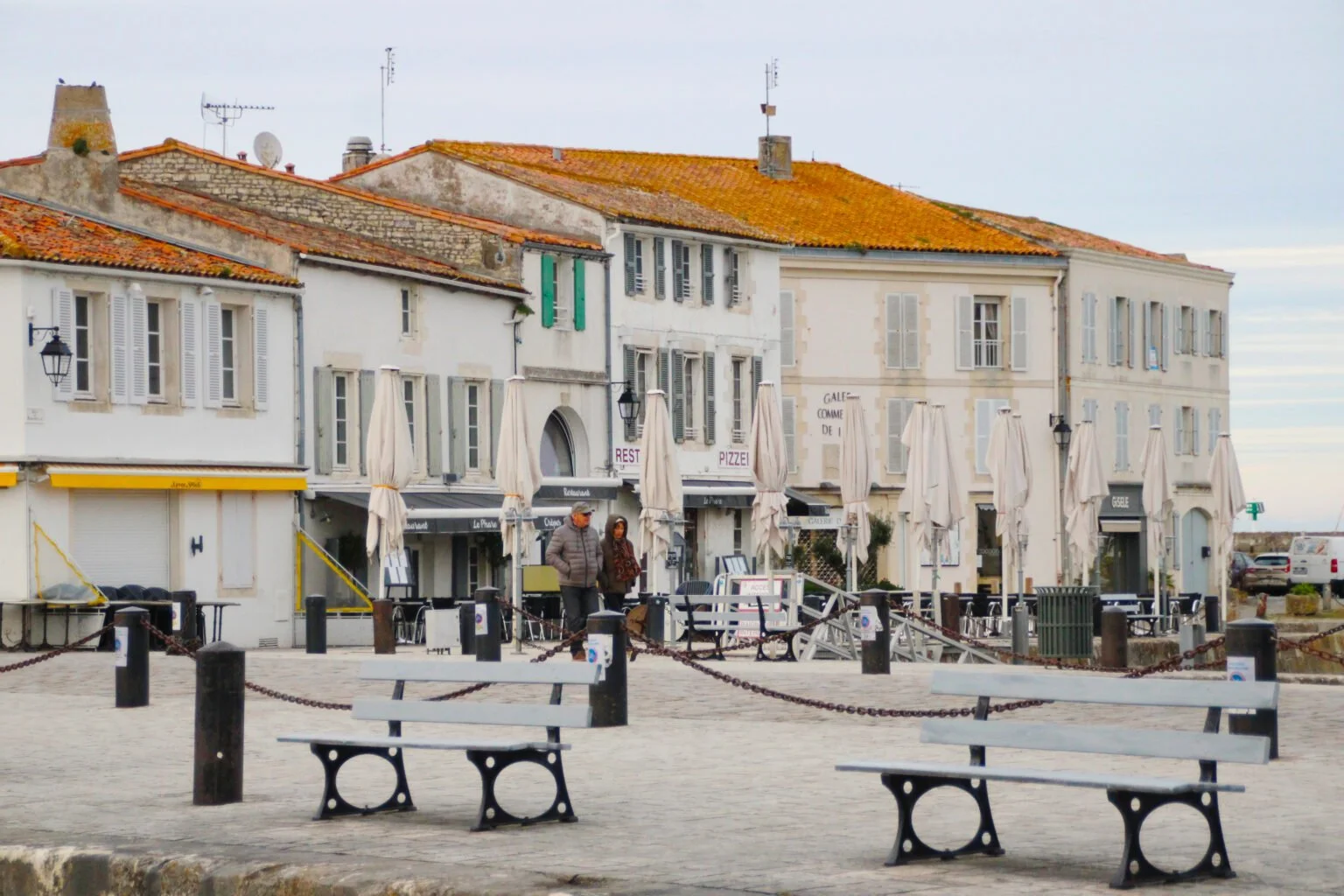
We stayed in La Flotte, where the streets are narrow even by French standards. In summer, I imagine them humming with bikes and voices. In winter, they mostly echo. You hear your own footsteps. Sometimes the wind answers back.
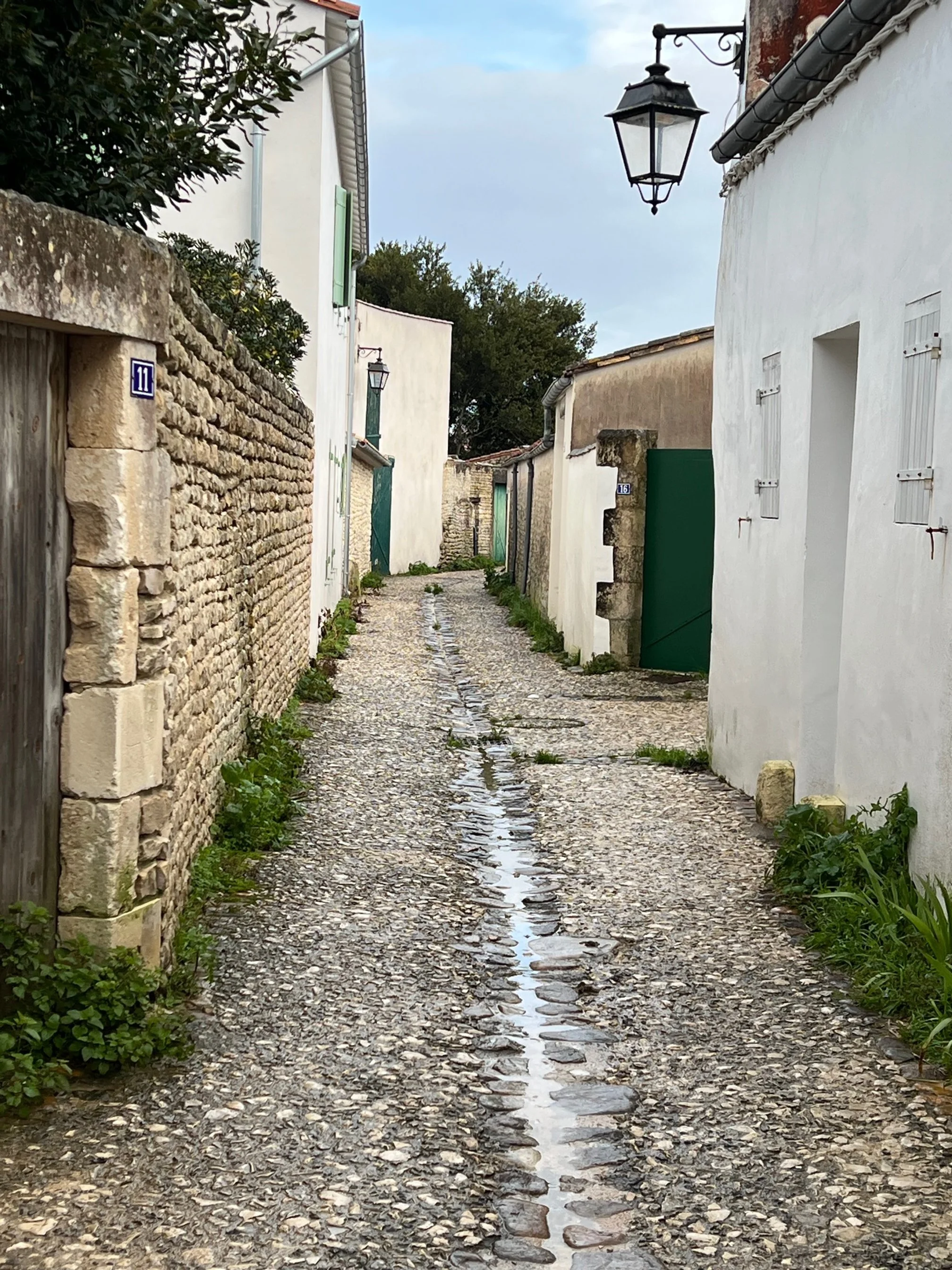
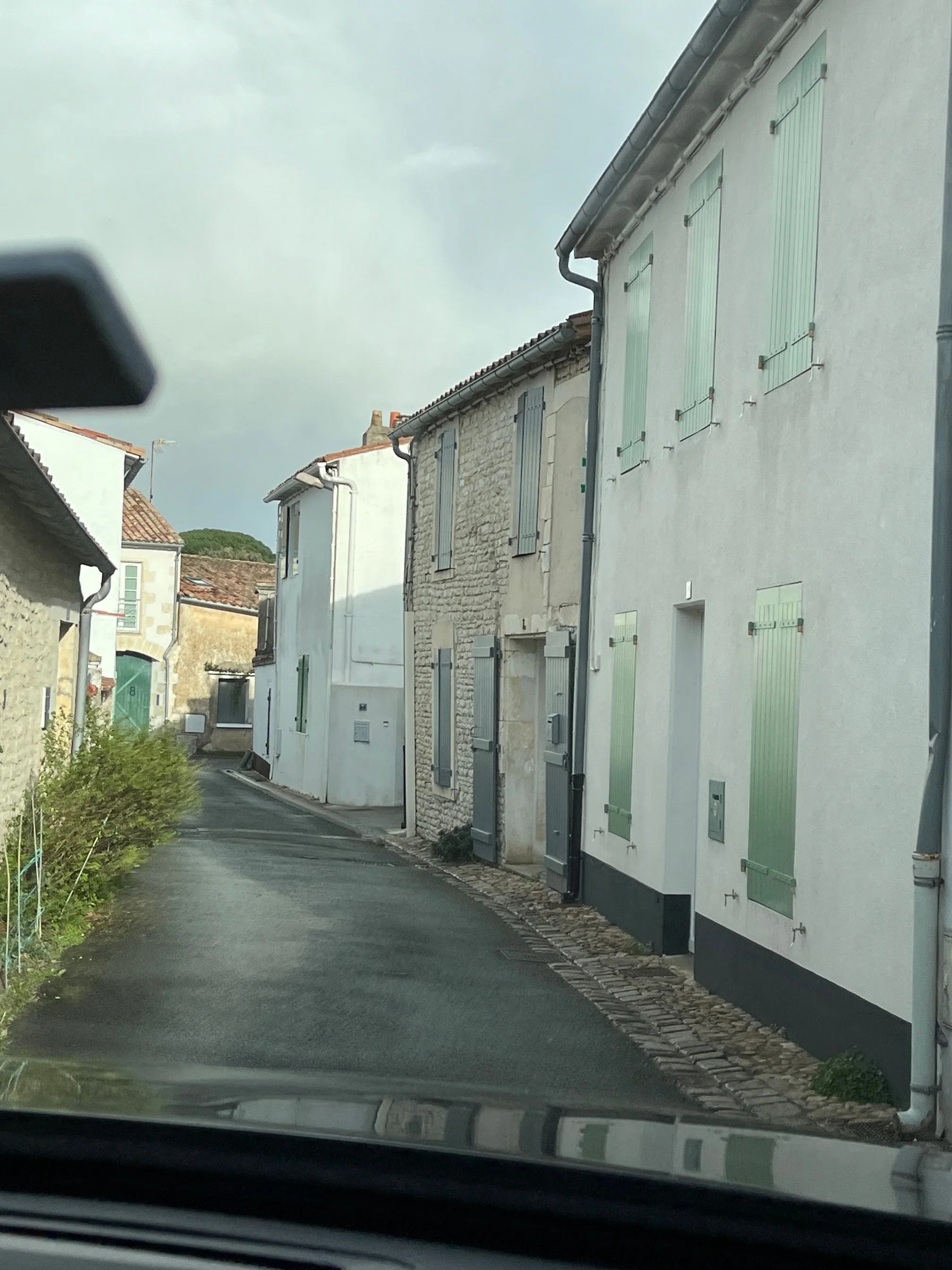
There wasn’t much going on, which turned out to be the point. The island rewards wandering without a plan, especially when there’s nothing scheduled to interrupt it.
The Atlantic Side
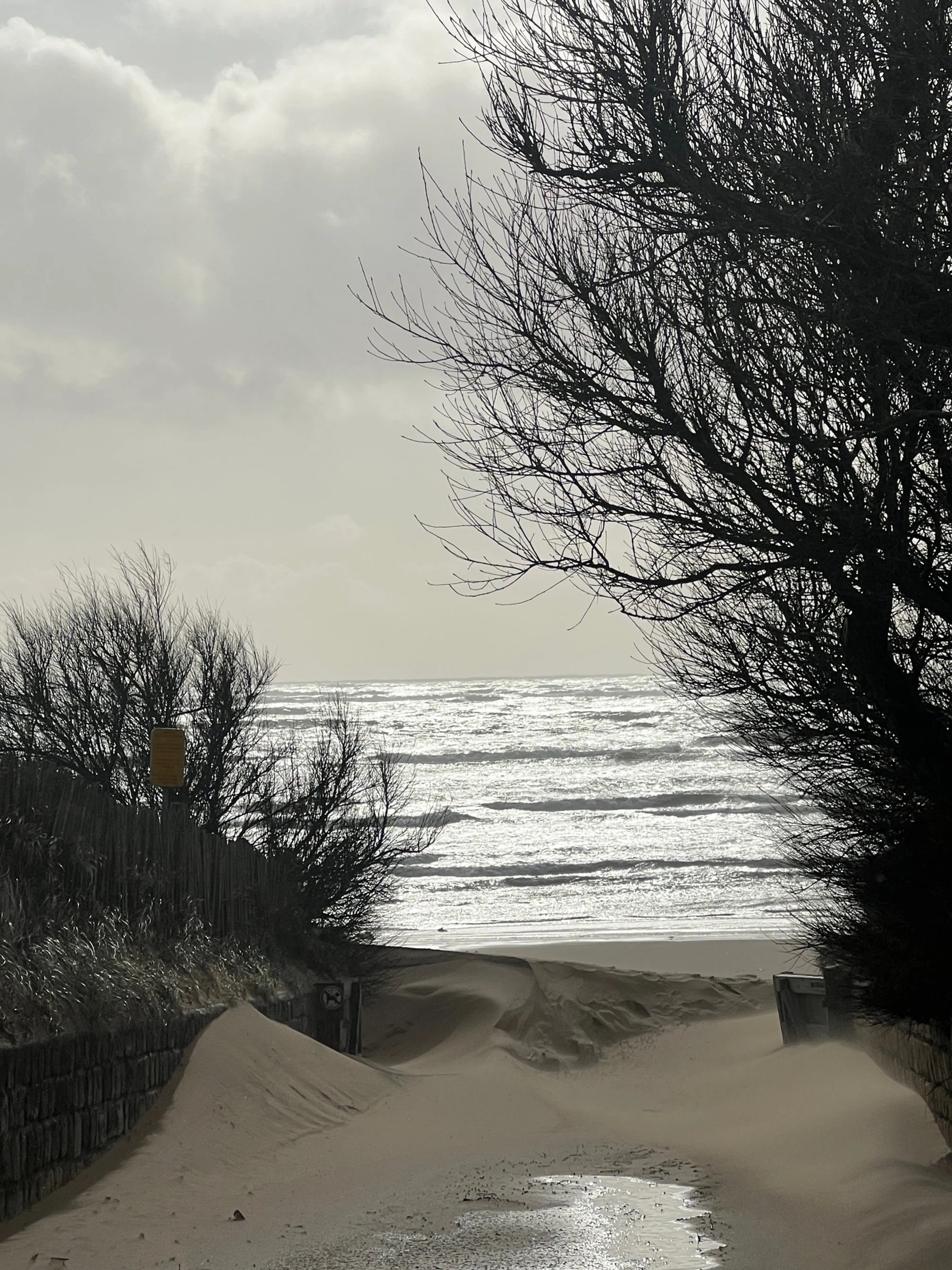
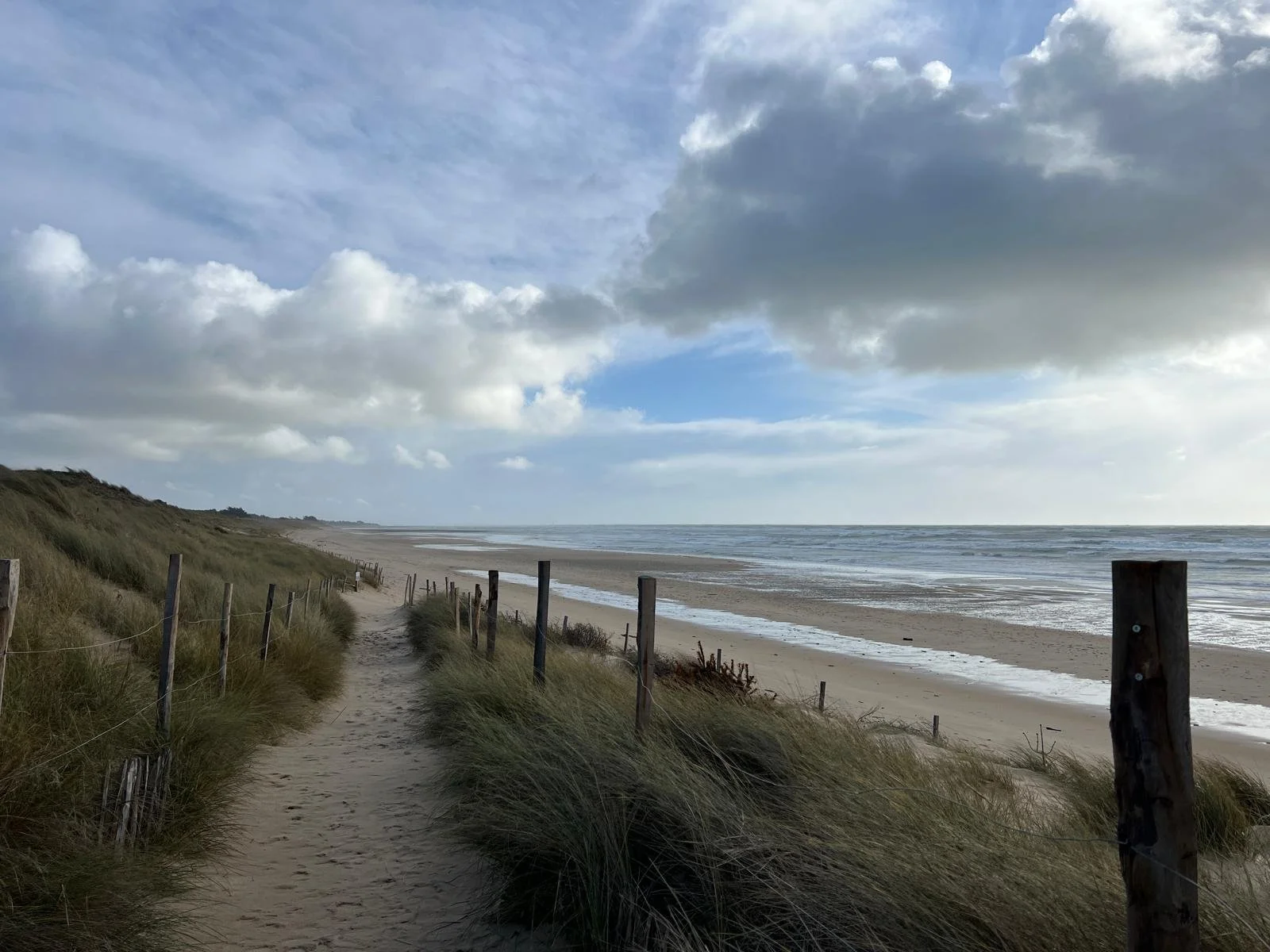
On the ocean-facing beaches — La Plage de Bois, on the Atlantic side — the island drops any remaining politeness. The water rolls in hard and loud. The sand shifts underfoot. Light breaks, reforms, and then breaks again. It’s not a beach that invites lingering. It’s one that asks you to stand still and pay attention.
Saint-Martin-de-Ré
We preferred Saint-Martin-de-Ré.
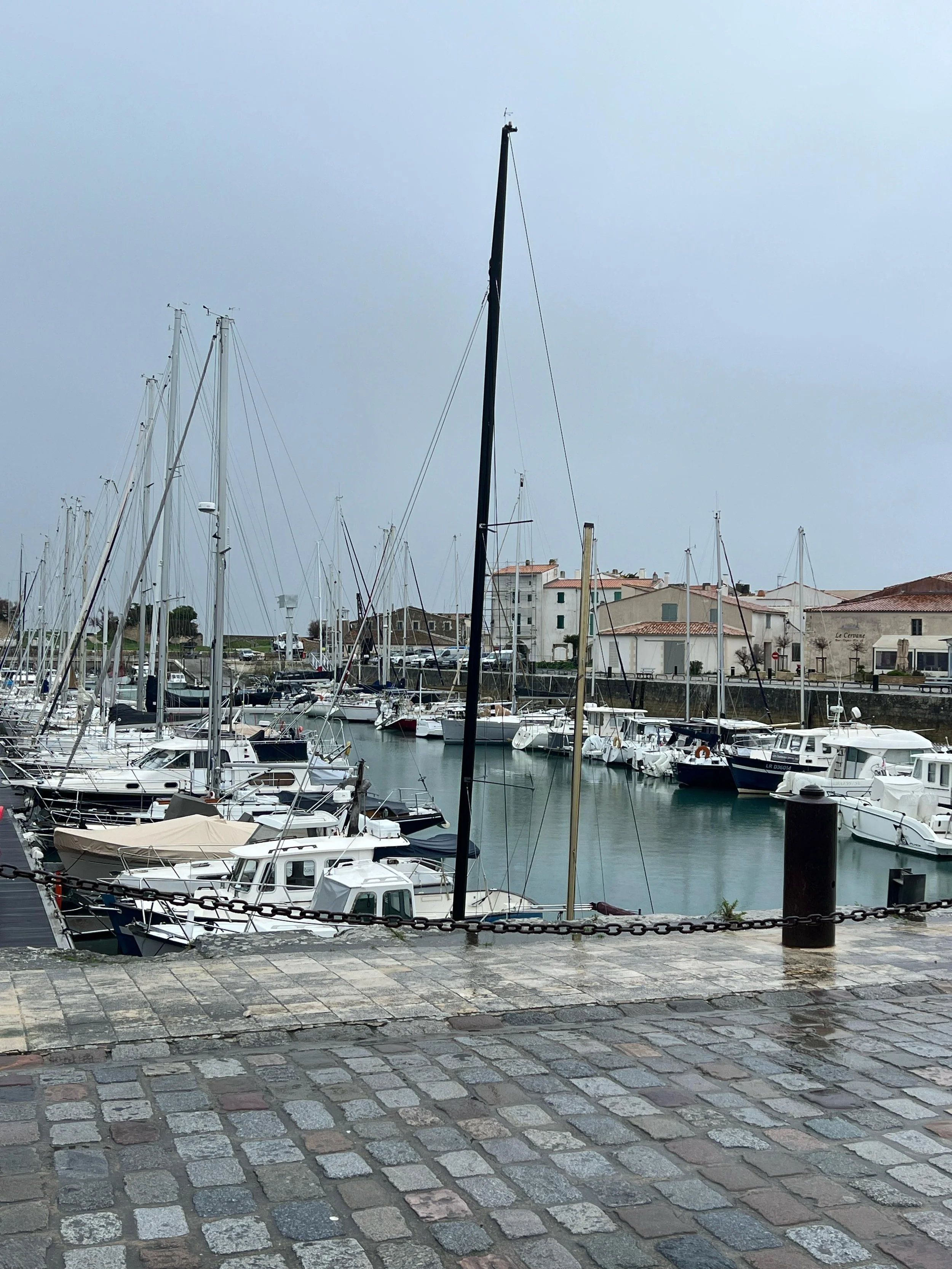
More life. More doors open. Enough movement to feel human without tipping into performance. It’s the village you’d choose if you were staying longer than a weekend and wanted options without noise.
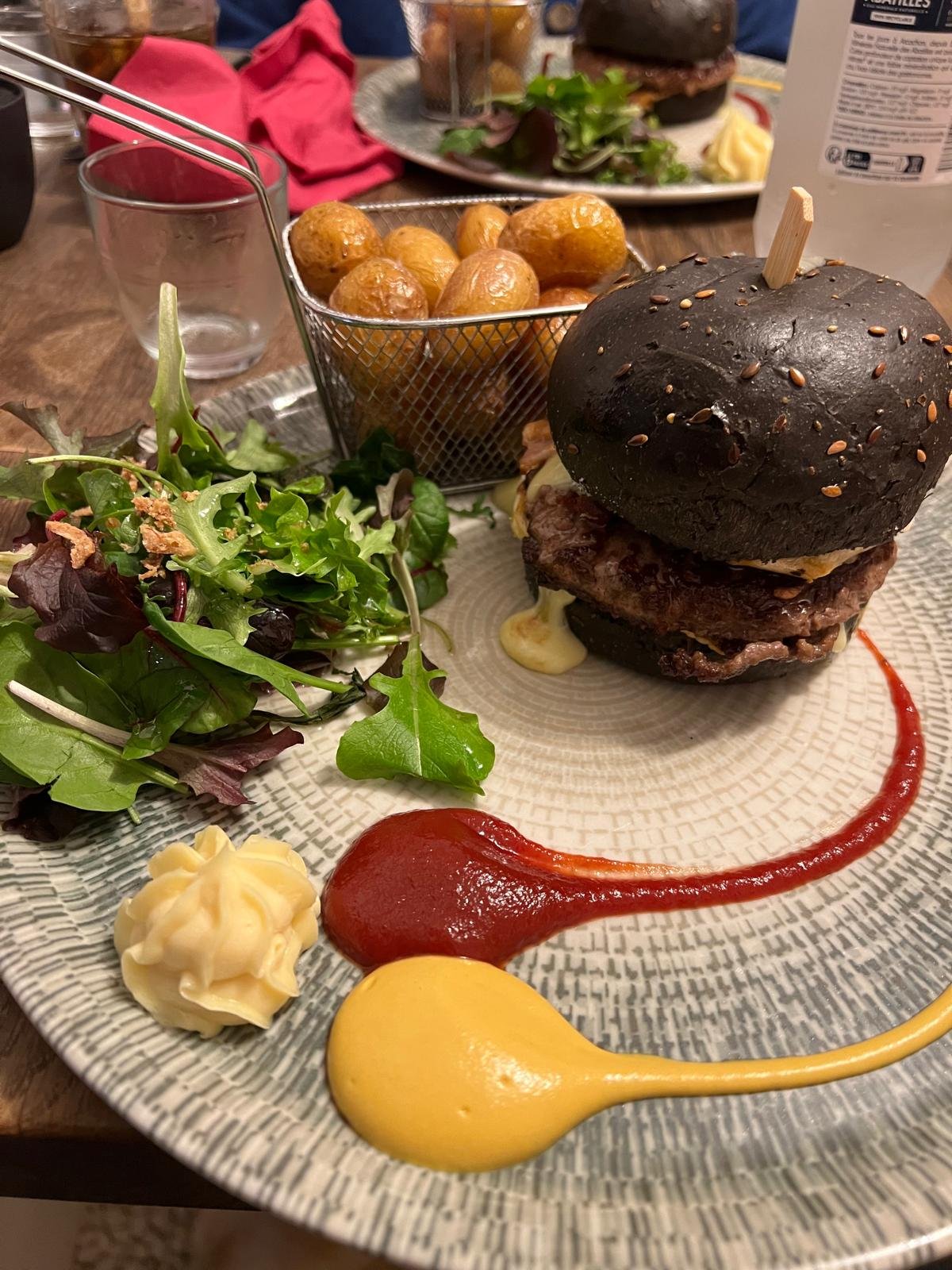
Lunch at Le Réfectoire landed exactly right. The décor leans slightly kitsch. The food does not. Everything we had was thoughtful, comforting, and confidently done. The service matched the day — present, unhurried, unfazed by weather.
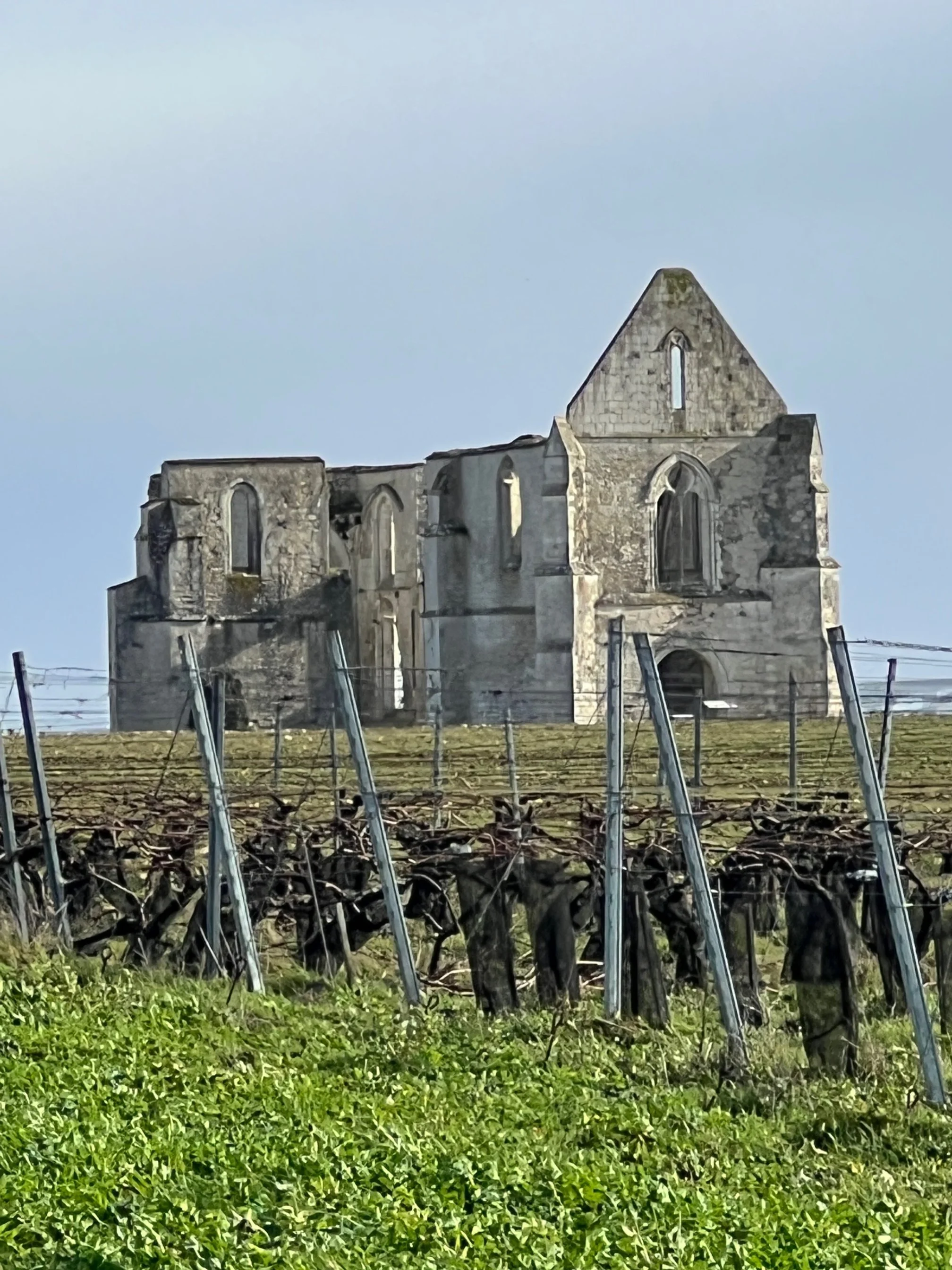
The Abbey
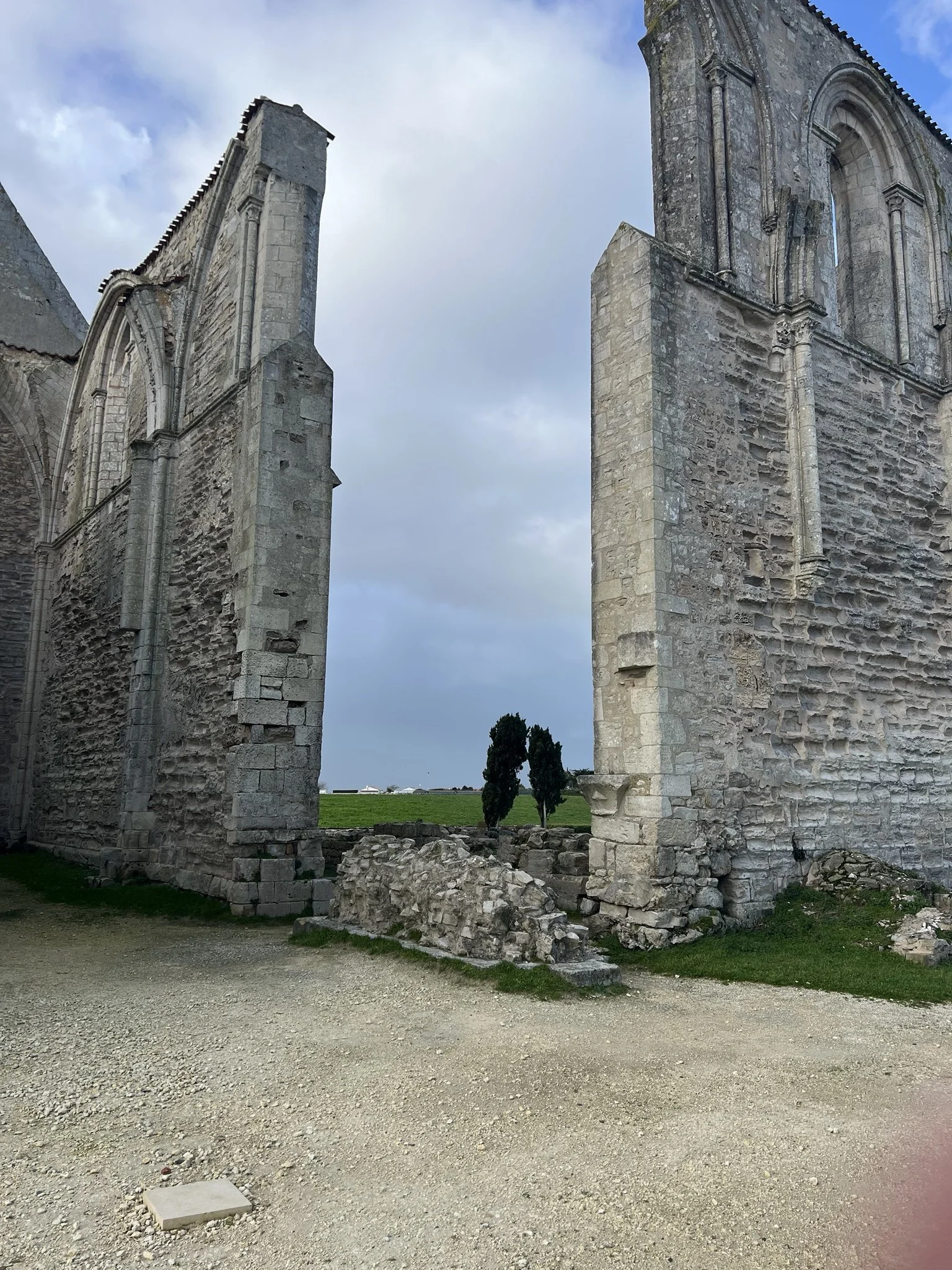
It sits at the far point of the island, fully exposed to the wind and the Atlantic, with nothing around it but open sky and fields. In summer, I imagine it absorbs noise. In winter, it absorbs nothing at all.
We had the place entirely to ourselves. No tickets. No barriers. No sense that we were interrupting anything. Just stone walls and broken arches, with wind moving through the structure as if that had always been the plan. The scale is calm, not grand. You don’t feel small here. You feel temporarily irrelevant, which is better.
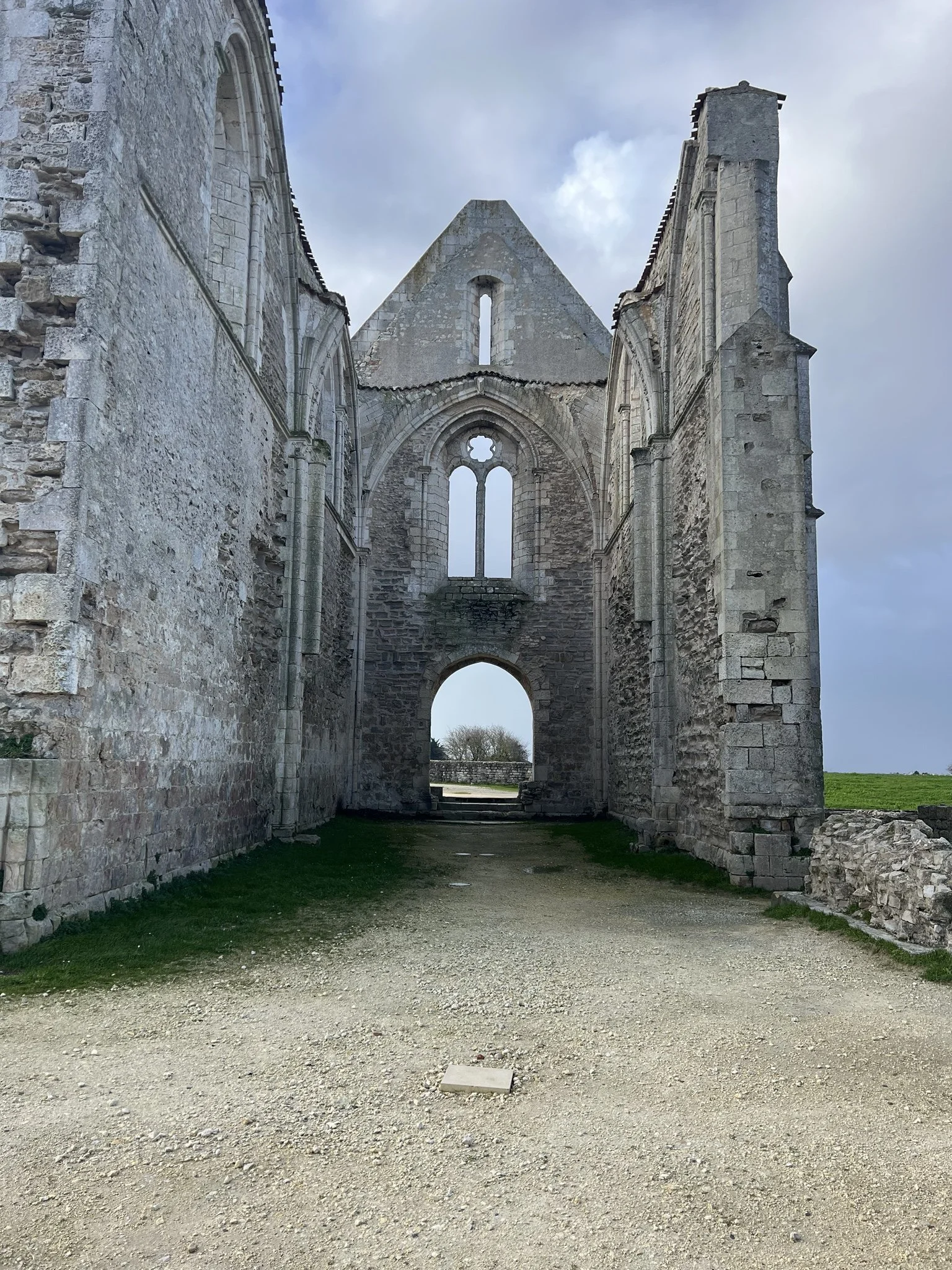
We walked slowly and stopped often, taking more photos than we meant to. The weather never settled, but the place didn’t seem to mind. It felt complete without being finished.
Potatoes
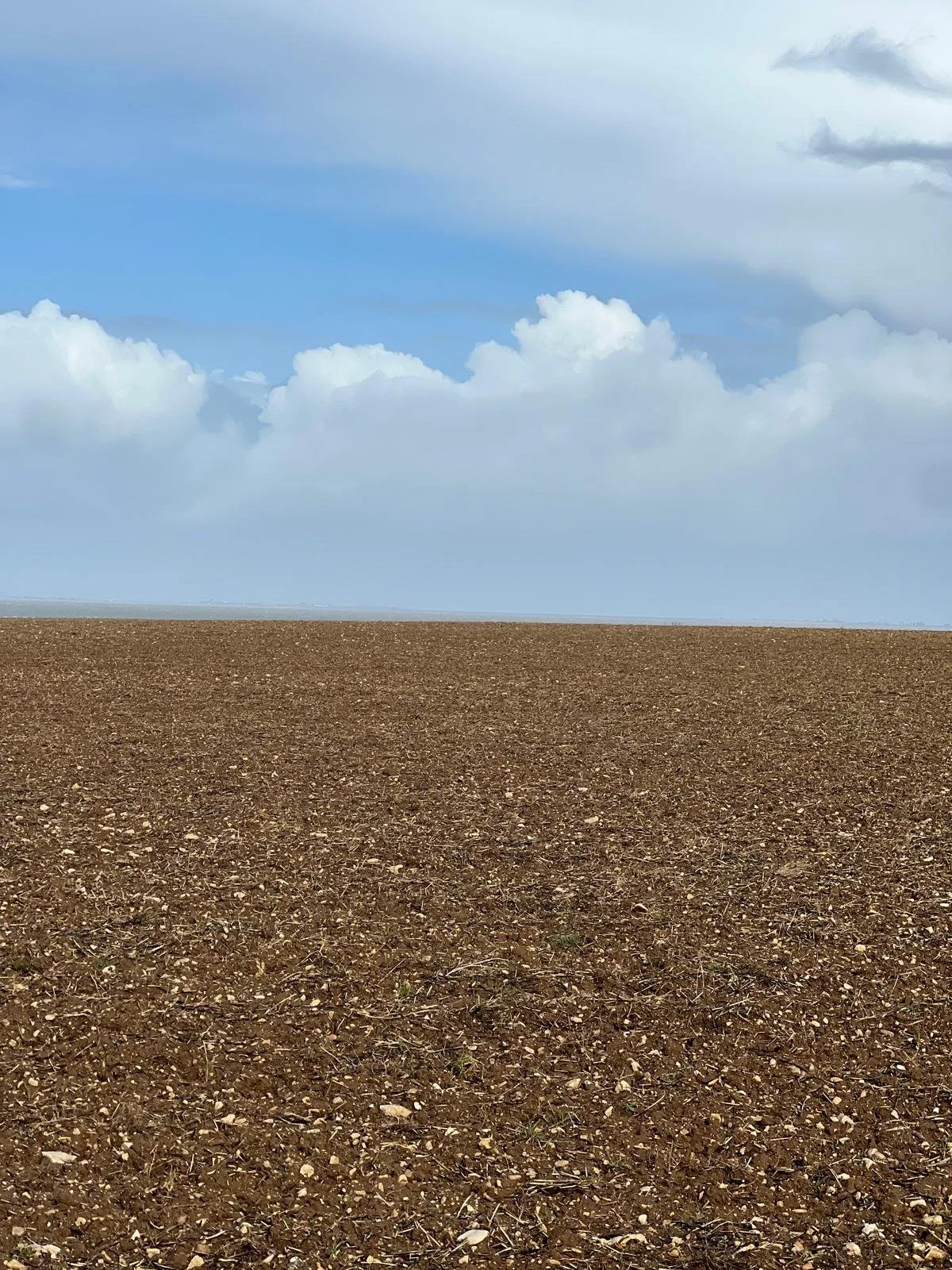
The abbey is surrounded by potato fields. Real ones. Right up against the ocean. Flat land, low rows, salt in the air and salt in the soil. These are the island’s potatoes — small, dense, unassuming, and somehow better than they have any right to be. The kind of ingredient that makes you stop asking questions.
In reality, I seek them out here in the Loire Valley when they come out in the summer.
It feels appropriate that a place this stripped back produces something so quietly perfect. No branding. No story attached. Just weather, soil, and time doing their work.
A Final Thought
Île de Ré in winter doesn’t entertain. It doesn’t explain itself. It offers exposure, space, and enough silence to notice what usually gets buried under activity.
For us, that was more than enough.