
What the Hell is Horseball?
Sully ran toward the top of the driveway.
A moment later I heard the metal gates at the bottom of our driveway swing open. Through them strode Pascal with purpose. Or at least the amount of purpose that five feet two inches and about a hundred and thirty pounds of French horseman can reasonably generate.
He walked up the drive the way cowboys in old westerns approach a ranch house—calm, deliberate, like a man who already knows why he’s there.
That immediately made me nervous. Pascal had been renovating the bathroom in the gîte next door, which meant there was always the possibility that he had arrived to explain why something now cost more money.
He stopped in front of me, nodded once, and said: “Horseball.”
That was it. Just the word. I waited for the rest of the sentence. Nothing came.
“Horseball?” I said. Pascal nodded.
Then he began explaining it the way French people sometimes explain things when they assume you already understand the general concept.
“Like football… rugby… horses… ball… hoop.”
I stared at him for a moment trying to assemble those ingredients into a sport that made any sense. I failed. But then he added two words that immediately caught my attention.
“Outside. Toute la journée.” Outside. All day.
Wait a minute, he had just said two things that are incredibly important details about horseball. First, it was happening outside. Second, it was apparently going to last most of the afternoon. That was all the information I needed.
At that exact moment my brain stopped trying to understand what horseball was and began focusing on something far more important. Picnic.
That meant portability. And the first thing that came to mind was the sandwich. Not just any sandwich.
The sandwich.
A fresh baguette split open lengthwise. The top half lightly brushed with good balsamic vinegar. Not the cheap syrupy stuff either — the kind that actually smells like grapes and patience.
The bottom half gets olive oil. Real olive oil. The kind where you can taste the peppery bite in the back of your throat. On top of that goes prosciutto. You cannot be shy here. The prosciutto has to make a statement. Six thin slices at a minimum. More if you’re feeling feisty. I am always feisty.
Next come fresh slices of mozzarella. Burrata if you mean business. Then fresh sliced tomato, something juicy. Then whole basil leaves laid across the top like a green roof. Don’t tear them. Leave them intact and rub them slightly between your fingers so the aroma wakes up.
A couple turns of black pepper. Then place the lightly dressed chapeau of the baguette back on top.
Find some delicious chips and a bottle of rosé, and maybe a white for the ladies, and you now have yourself a proper picnic for whatever the hell horseball is. The only thing missing? Wawn chairs. Those are essential and must be located.
At that point I realized Pascal was still standing in front of me explaining horseball.
“We’re in” it came out of me without me even realizing it. Denise looked at me with amusement. “Well… ok. I guess so.”
She pivoted to talking to him about the bathroom. That was my chance to tackle something important. I had to go find some lawn chairs.
It was Thursday. The tournament was Saturday. That meant I had work to do. There was no time to order something from Amazon and hope it showed up in time. I needed chairs immediately.
Then I remembered Decathlon. If you’ve never been inside a Decathlon, imagine a sporting goods cathedral roughly the size of a Costco. Entire departments are devoted to kayaking, mountaineering, archery, fishing, cycling, and other activities that appear to require substantial planning and specialized footwear.
You could outfit an expedition to Nepal in there and still have time to pick up a badminton set. I headed straight for the camping section. There were almost too many chairs to choose from.
My buying strategy was simple: portability. I had absolutely no idea how far I might have to carry a chair once we arrived at this horseball tournament, and the last thing I wanted was to be dragging some bulky contraption across a French field while Pascal waited patiently in the distance.
Some chairs looked too cheap. Others looked perfectly nice but carried price tags that made me think, I am not paying that much for a folding lawn chair.
Right in the middle of the department was a large display of items the good people at Decathlon apparently believed represented the proper tools for enjoying the outdoors: portable picnic sets, loungers, coolers, hibachis, and various other devices designed to make sitting outside slightly more, comfortable.
And then I saw them. Rugged-looking folding chairs. I picked one up. Oh, it was light.
The Quechua “Comfortable Reclining Chair.” A name that made a promise I very much hoped it could keep. There were three versions of the chair, arranged like a Goldilocks display.
One was clearly for the little French camper.
Another looked a little small, maybe for the little camper’s mom.
And the end was the Poppa Bear version.
That was the one. I grabbed it and headed toward the checkout. A few steps away, it dawned on me. Denise. I stopped, turned around, and walked back. She was getting a Poppa Bear chair too.
Saturday morning arrived and I immediately went to work assembling the equipment for our afternoon expedition to horseball.
The chairs were easy. They were leaning proudly against the wall where I had left them after returning from Decathlon, like two soldiers waiting for deployment.
The thermoses were another matter. And not just any thermoses, but Corkcicle insulated wine canteens. I knew they were somewhere in the house. I just didn’t know where. Those thermoses had been following us around since California. I bought them sometime around 2018 with vague visions of elegant outdoor drinking on the beach that never actually happened.
Over the years Denise had occasionally picked one up while cleaning out a cabinet and asked the obvious question. “You’ve never used these. Why are you keeping them?”
Which is exactly the sort of short-term thinking that has ruined countless great male preservation projects. Every man knows that somewhere in his garage, basement, or kitchen cabinet there exists an object he has been saving for years for a very specific future purpose.
Today the thermoses were coming to horseball.
With that crisis resolved, I turned my attention to the sandwich. I had already secured the necessary ingredients that morning. A fresh baguette. A perfectly ripe tomato from the fruiterie. Mozzarella from the cheese monger. Prosciutto from the butcher. This was shaping up to be a very respectable picnic.
Denise had told me last night that we would probably leave around one in the afternoon. Which meant we had plenty of time.
A few minutes before eleven I saw movement outside the window. Pascal was walking up the driveway. I stepped outside.
“Ready?” he asked. “Ready?” I said. “We’re not leaving until one.” Pascal shook his head. “Non. It starts at one.”
That was the moment I realized something had gone very wrong with the schedule.
Denise hadn’t even started getting ready yet. She requires about an hour to get ready to go to the grocery store.
I looked back at Pascal. “Can you give us a little time? Denise thought we were leaving at one.” He did not look thrilled. His wife and the rest of the family had already left earlier.
We were apparently his transportation. I ran back into the house.
“Denise. Pascal’s here.” She looked up calmly. “I thought it was one.”
Now things started moving very quickly.
While Denise scrambled to get ready, I returned to the kitchen and began assembling the sandwich at a speed that would have impressed professional catering staff.
Denise eventually emerged from the house ready to go in what may have been a personal speed record.
The chairs were loaded. The sandwich was wrapped. Snacks were in a separate bag. The thermoses, finally located after years of dormancy, were filled and packed in the cooler like the precious cargo they were. I filled both thermoses, just in case.
A few minutes later we were on the road, the big American SUV feeling even more ridiculous with Pascal in the passenger seat. I kept glancing over, quietly wondering if his feet would actually reach the floor.
Denise and Pascal launched into a rapid-fire conversation about the bathroom renovation. Every few sentences Denise would thrust her phone toward the front so I could see the translation app, then yank it back when Pascal replied. The app was doing its best, but the results were… creative.
At one point Pascal said something that made Denise laugh out loud. She turned the screen toward me: “‘The tile is crying like a little bitch.’”
I nearly swerved. “That can’t be right.” Pascal shrugged from the passenger seat, completely unbothered. “French tile is very emotional.”
Denise snorted. “Close enough.”
I shook my head and focused on the road, still trying to piece together what exactly we were about to watch. Horse… ball. With hoops. The more I thought about it, the less sense it made — which, in France, usually meant it was going to be excellent.
Eventually the countryside began to open up and signs for Lamotte-Beuvron started appearing along the road.
Then the traffic changed. Horse trailers began appearing on the road ahead of us. Trucks pulling long aluminum rigs. Riders moving between fields in tall boots and helmets. A steady stream of vehicles all heading in the same direction.
Pascal pointed ahead. “Là.”
Fields rolled out in every direction. Arenas. Barns. Warm-up rings. Horse trailers parked in long rows. Riders moving through the dust like this entire patch of countryside existed solely for the purpose of transporting horses from one place to another.
I slowed the car. “Pascal… what is this place?” He looked at me as if the answer was obvious. “Le Parc Équestre Fédéral.”
He gestured out across the fields. “Very big. Four hundred hectares.” I tried to convert that number in my head and failed.
Pascal helped. “Thousands of horses here for competitions.” I looked out across the fields again.
Arenas stretched toward the tree line in every direction. Riders warming up. Horses trotting past in groups. Trucks and trailers parked like a temporary city had appeared in the middle of rural France.
There had to be tens of thousands of people here. This was a seriously big money event. And I had never even heard of the sport.
Pascal pointed toward one of the arenas in the distance. “C’est là.” This is it.
We eventually found Pascal’s family sitting along the rail of one of the arenas.
The field itself looked like a large sand ring bordered by thick padded rails, the kind that suggested the people who built it fully expected horses to collide with things at speed. Which, as it turned out, they absolutely did.
Several riders were already circling the arena as we arrived. Horses trotting, then cantering, then accelerating into something that looked suspiciously like a full sprint.
I leaned over toward Pascal. “So… how exactly does this work?”
He pointed toward the middle of the field where a ball lay on the sand. It wasn’t a normal ball. It had several leather straps wrapped around it, almost like handles. “Ball,” he said.
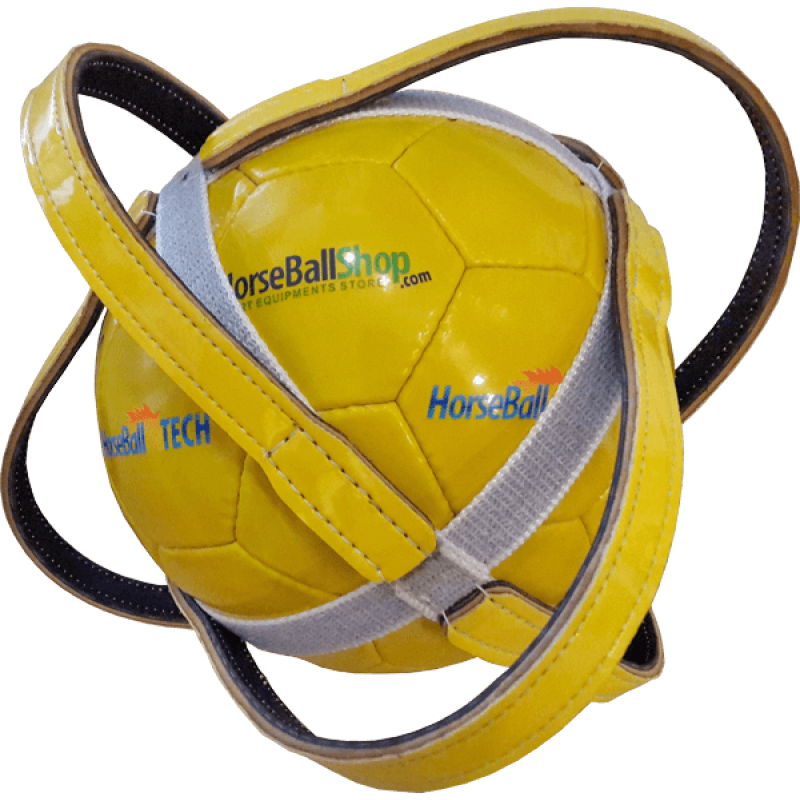
Then he pointed to a large horizontal hoop suspended several meters off the ground at either end of the arena.
“Goal.”
That was the entirety of the explanation.
A whistle blew and suddenly everything sped up. Two teams exploded into motion.
The horses launched forward, hooves digging into the sand and throwing dust into the air. Riders leaned low in their saddles, reins in one hand while the other reached down toward the ground.
One of them did something that made absolutely no sense the first time I saw it.
At full gallop the rider dropped sideways off the horse, hanging nearly upside down with one leg hooked over the saddle, and scooped the ball off the sand using the leather straps. The horse didn’t slow down. It simply kept running.
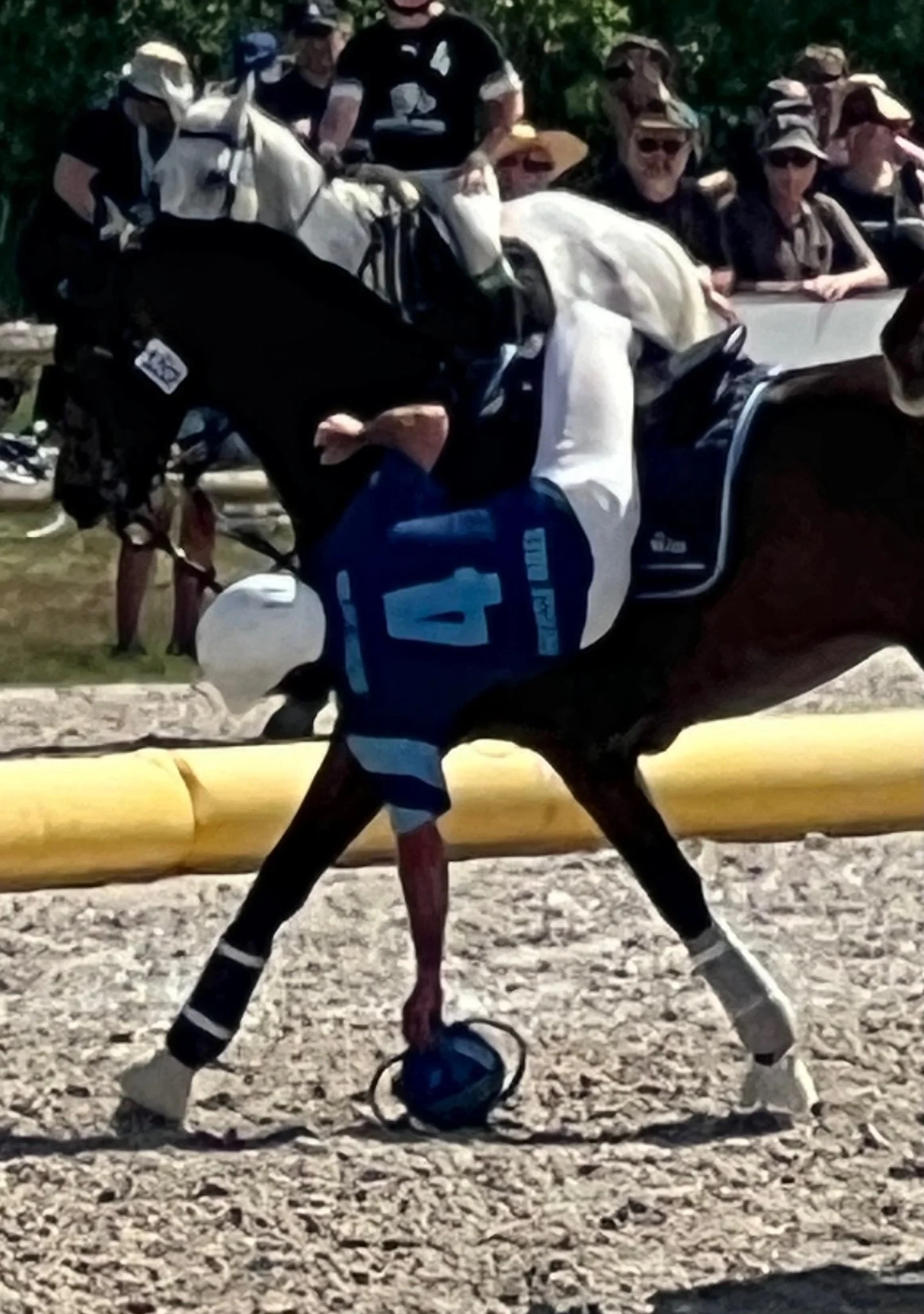
The rider swung back upright, cradled the ball, and suddenly three other riders were on top of him trying to rip it away.
Horses were cutting sideways across the sand, pivoting so quickly it looked like they were turning on hinges. One moment they were charging forward, the next they were sliding sideways in a cloud of dust, snorting and stomping as riders wrestled over possession.
Then the ball flew. Someone had launched it across the arena.
Another rider caught it mid-stride and sprinted toward their end of the field where the hoop hung suspended above the sand.
The horse gathered itself, surged forward, and the rider flung the ball through the hoop like a basketball shot taken from the back of a moving pickup truck.
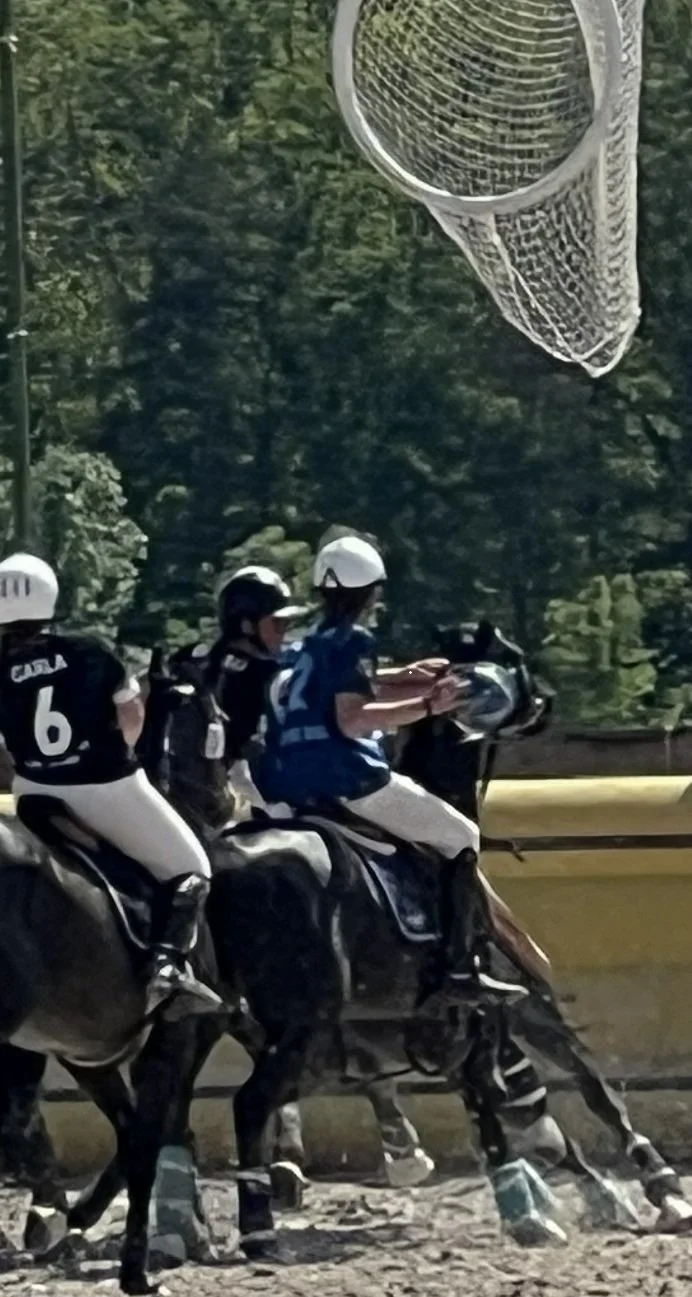
The crowd along the rail clapped.
I stared at the field for a moment. “Okay,” I said quietly. “That’s actually pretty impressive.”
Pascal nodded. “Oui.”
Then play started again and the horses exploded across the arena, cutting sideways through the sand and pivoting so quickly it looked like they were turning on hinges.
I watched one rider lean low in the saddle while the horse slid to a stop in a cloud of dust. Horses surged past the rail in a blur of muscle and dust while riders leaned and twisted in the saddle chasing the ball.
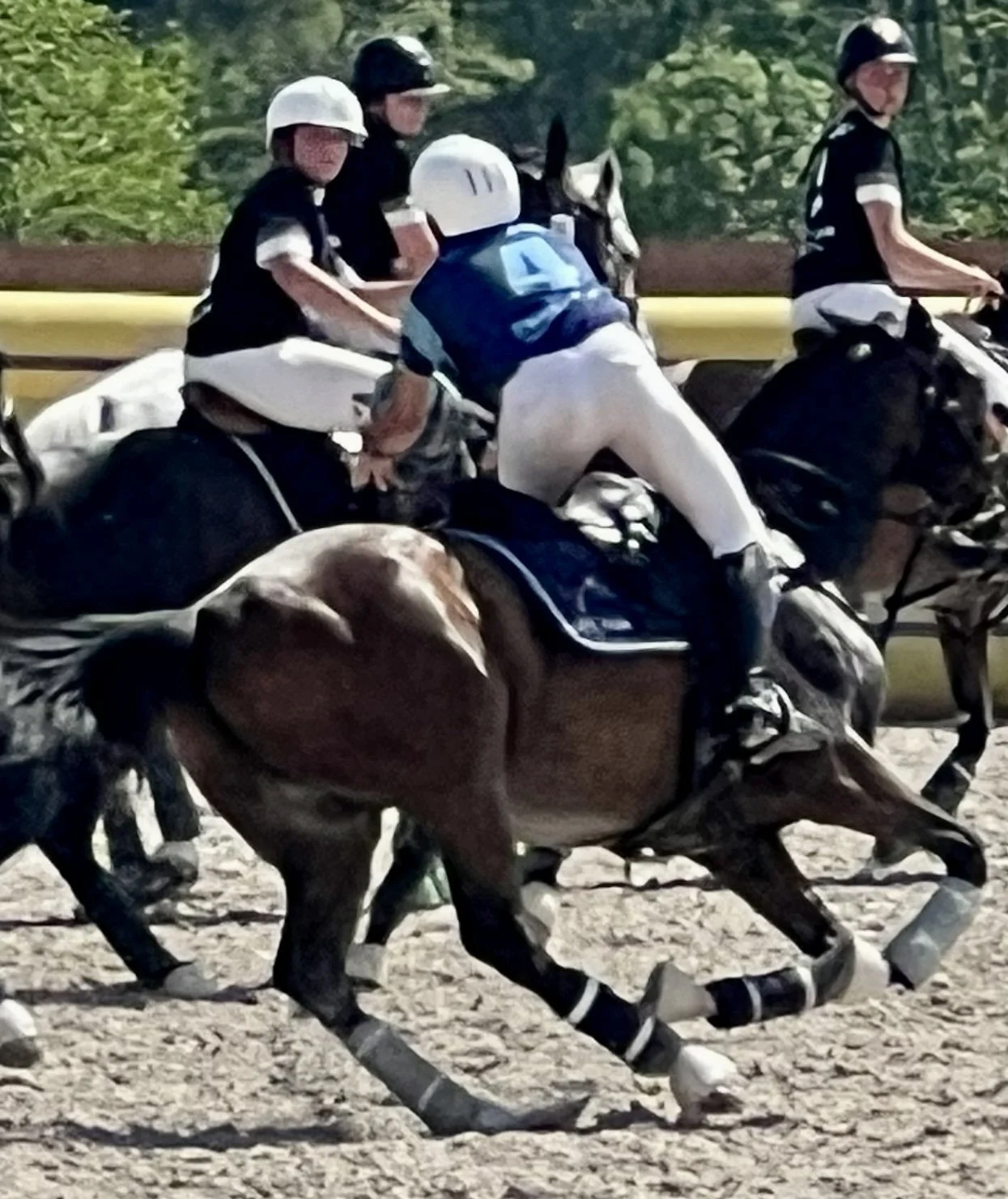
That’s when a thought occurred to me. I should never try this. Not because the sport looked dangerous. Although it clearly was.
But because horses, as a general rule, do not seem to enjoy it when I get on them. I have learned this through experience.
The last time I had been on one was during a trip to the Grand Canyon many years earlier. For the occasion I had purchased a four-hundred-dollar Marlboro Man oilskin coat specifically for the ride, because apparently if you’re going to ride a horse along the rim of one of the most spectacular natural landmarks on earth, you might as well look like you know what you’re doing.
Everyone else’s horse calmly followed the trail.
Mine appeared to have other plans.
For most of the ride it drifted suspiciously close to the giant saguaro cactuses along the edge of the path, brushing past them as if it was trying to scrape me off into the desert.
Not accidentally either. Deliberately.
Every time the trail narrowed the horse would casually angle toward another cactus like it was conducting a quiet experiment to determine how much cactus contact it took to remove a rider wearing a coat he shouldn’t have bought.
Meanwhile the guide kept saying things like “Relax” and “Just let the horse do its thing,” which is easy advice to give when you are not the one sitting on a thousand-pound animal that appears to be actively questioning your presence.
We eventually completed the ride without incident, but the horse made it clear the entire time that it would have preferred someone else.
That was the day I realized something important. Horses and I are not natural partners.
Which is why watching these riders fly across the arena, hanging sideways off galloping horses while wrestling over a ball, filled me with admiration. And relief.
After halftime of the second match, I quietly stepped back from the rail.
The crowd along the fence leaned forward every time the horses charged past, reacting to each play like they were standing courtside at a basketball game. Which was great for them.
But I had come prepared.
I walked a little farther back across the grass until I found a comfortable patch of shade about a hundred yards from the arena. Close enough to see the action. Far enough away that I no longer felt like I might accidentally become part of it.
Then I deployed the chair. This, it turns out, is where the Decathlon engineering team truly earns its money. One smooth motion and the QUECHUA Papa Bear version unfolded itself into a surprisingly luxurious throne for a man attending his first horseball match.
I sat down. Perfect.
From this distance the match looked even better. Horses sprinting across the sand, dust rising behind them, riders leaning and reaching and throwing the ball through the hoop like some sort of medieval Olympic event.
Denise eventually wandered over, I opened the second chair and she sat beside me.
Once the coast was clear I reached into the cooler and began assembling the picnic.
First came the thermoses.I unscrewed the lid and poured a generous splash of rosé. Cold. Still perfectly cold.
There are few moments in life more satisfying than finally finding a use for something you have stubbornly refused to throw away for seven years.
Then came the sandwich. The baguette had survived the journey beautifully. Unwrapping it, staring at it lovingly, I handed D her part.
She took a bite and nodded. “That’s really good.”
After finishing her sandwich, she stood up and brushed the crumbs from her hands. “I’m going back up there,” she said, nodding toward the arena where Pascal’s wife was standing along the rail.
And just like that I was alone again. Which, given the circumstances, worked out perfectly.
Just as I was settling into this small moment of culinary victory, two of Pascal and Katia’s youngest foster kids wandered over and sat down next to me.
They had clearly spotted the chips. Specifically, the Tyrrells. Salt and pepper. Crazy designer potato chips out of England. The good ones. They looked at the bag. Then they looked at me. I handed it over.
They began eating them with the quiet focus that only children and professional snack enthusiasts possess.
And I realized something. Nobody was bothering us. The kids were happy. The sun was warm. The horses thundered across the arena in the distance. I leaned back in my Decathlon throne, took another sip of wine, and watched the match unfold.
It was, I had to admit, a pretty spectacular way to spend an afternoon. Which, in my opinion, is the correct way to experience horseball.
From time-to-time Denise would wander back over to check on me, giving quick updates from the front lines along the rail.
“They’re doing really well,” she said, “The next game is the championship for their division.”
I looked up toward the arena where Bastien and his teammates were circling, horses shifting impatiently beneath them while they waited for the referee to start play.
The whistle blew. The horses exploded forward again.
Dust rose off the sand as riders leaned low to scoop the ball, then they passed it back and forth as they moved down the field. Back and forth they went. Suddenly Bastien had the ball and was sprinting toward the goal.
Seconds later the ball arced through the air and passed cleanly through the hoop. The crowd along the rail erupted. Denise turned around and raised both arms from the edge of the arena.
Pascal’s wife had told me that Bastian’s team was one of the better ones in the tournament. That made sense, he had been a champion rider most of his life. Even from a distance you could see the difference. The whole team moved with the confidence of riders who had been doing this together for years.
Eventually the match ended with a loud cheer from the crowd. D was as elated as if she’d just watched the Super Bowl. Bastien’s team had won.
Not a bad afternoon’s work.
I lifted my glass toward the field, the last of the rosé catching the afternoon light. From my Quechua throne a hundred yards back, the whole scene looked perfect: horses still prancing in the dust, Pascal and his family celebrating along the rail, the kids happily working their way through the Tyrrells.
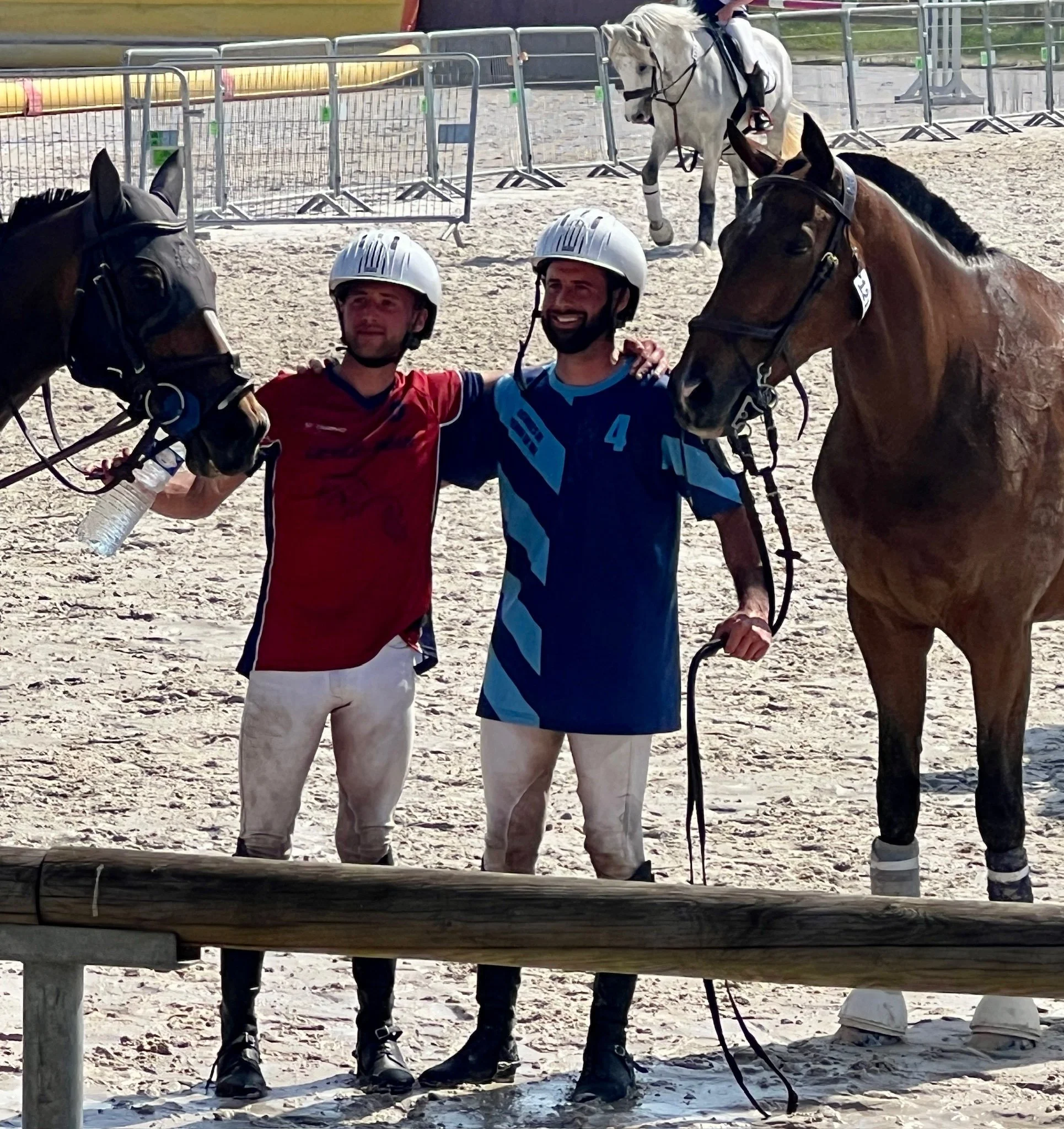
I took a slow sip and smiled. This — right here — was exactly why we’d moved to France. Not for the grand châteaux or perfect Parisian afternoons, but for days like this: one where a single mysterious word from a five-foot-two French horseman could turn into an all-day outdoor spectacle, a perfectly ridiculous sport, and the best damn prosciutto sandwich I’d eaten in months.