
A Morning That Got Away in Avignon
It was a simple Saturday morning. We headed into Avignon early, slipping out in the cool air before the heat made its daily announcement. The kind of morning where you feel productive just for being awake. We were confident the afternoon would be spent by the pool, groceries secured, mission accomplished.
The goal was Les Halles d’Avignon. The city’s famous farmer’s market. Not just a market. The reason we got up early. The kind that has been feeding this city in one form or another for centuries. This isn’t a pop-up for tourists. It’s the evolution of something that’s always been here. Markets stood near this square in the 1500s. The current hall rose in the late 19th century. It has been rebuilt, reshaped, and modernized along the way.
Provence has always drawn writers who tried to explain it. They talk about light. They talk about time. They talk about meals that stretch. What they’re really describing, whether they admit it or not, is places like this. Most of what they’re chasing is standing right here behind a fish counter at 9:30 in the morning.
The purpose hasn’t changed. This is where Avignon buys dinner.
That was my goal too. Grab a few things for the next couple of days. Fish, something to grill, vegetables that had seen real sun. Plus, any other goodie I could find. It was an excuse for me to indulge in some respectable food porn while Denise got her own fix elsewhere.
We had a plan. We always have a plan. The plan rarely survives in a new French city to explore.
As we passed through the city gates, the scale shifted. The stone rose around us. The streets tightened. The light narrowed. I eased the car forward through lanes that were never designed with modern vehicles in mind, pretending I wasn’t calculating the odds of finding a parking space within walking distance. Around Place de l’Horloge, café owners were dragging their chairs into position, claiming territory for the day.
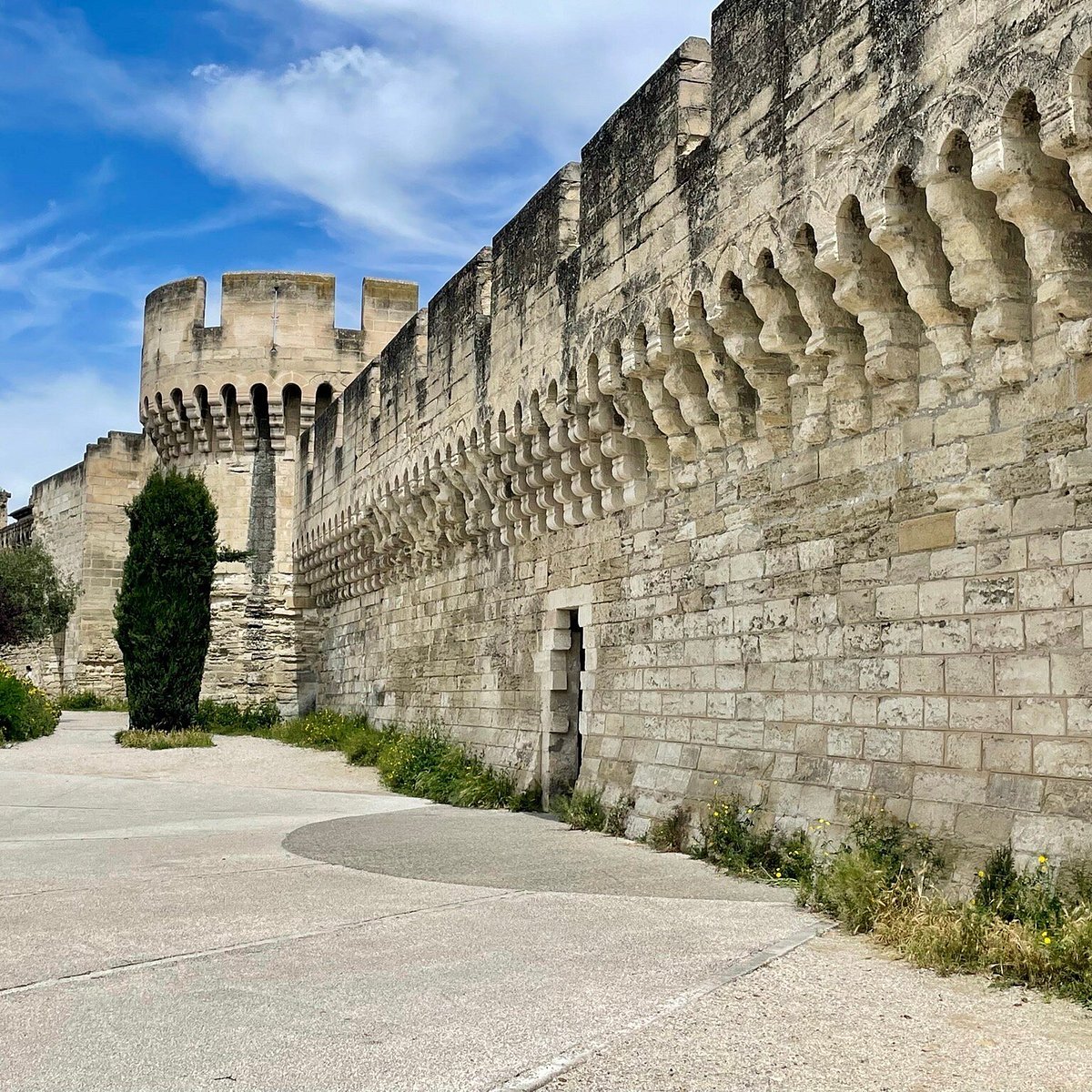
Denise was already scanning shop windows along Rue des Teinturiers with the focus of someone who had absolutely no intention of sticking to the plan. Sully stood in the back seat, nose pressed forward, ready to charm an entire city before breakfast.
We found a parking space that was legal enough to pass inspection and shut the engine off. The moment Sully hit the cobblestones, the morning belonged to him. Heads turned. Smiles surfaced. Hands reached down. If you want to feel like a celebrity in France, forget writing a book. Walk a large Golden Retriever through a medieval square at 8:45 a.m.
And then it hit me. This was once the center of the Catholic world.
Seven popes lived here in the 14th century. Not in a chapel, but in the Palais des Papes. It rises above the city with the quiet confidence of something that once ruled the world. The walls are thick, like a fortress. The stone isn’t decorative, it’s intimidating. Avignon does not flirt with history, it made it.
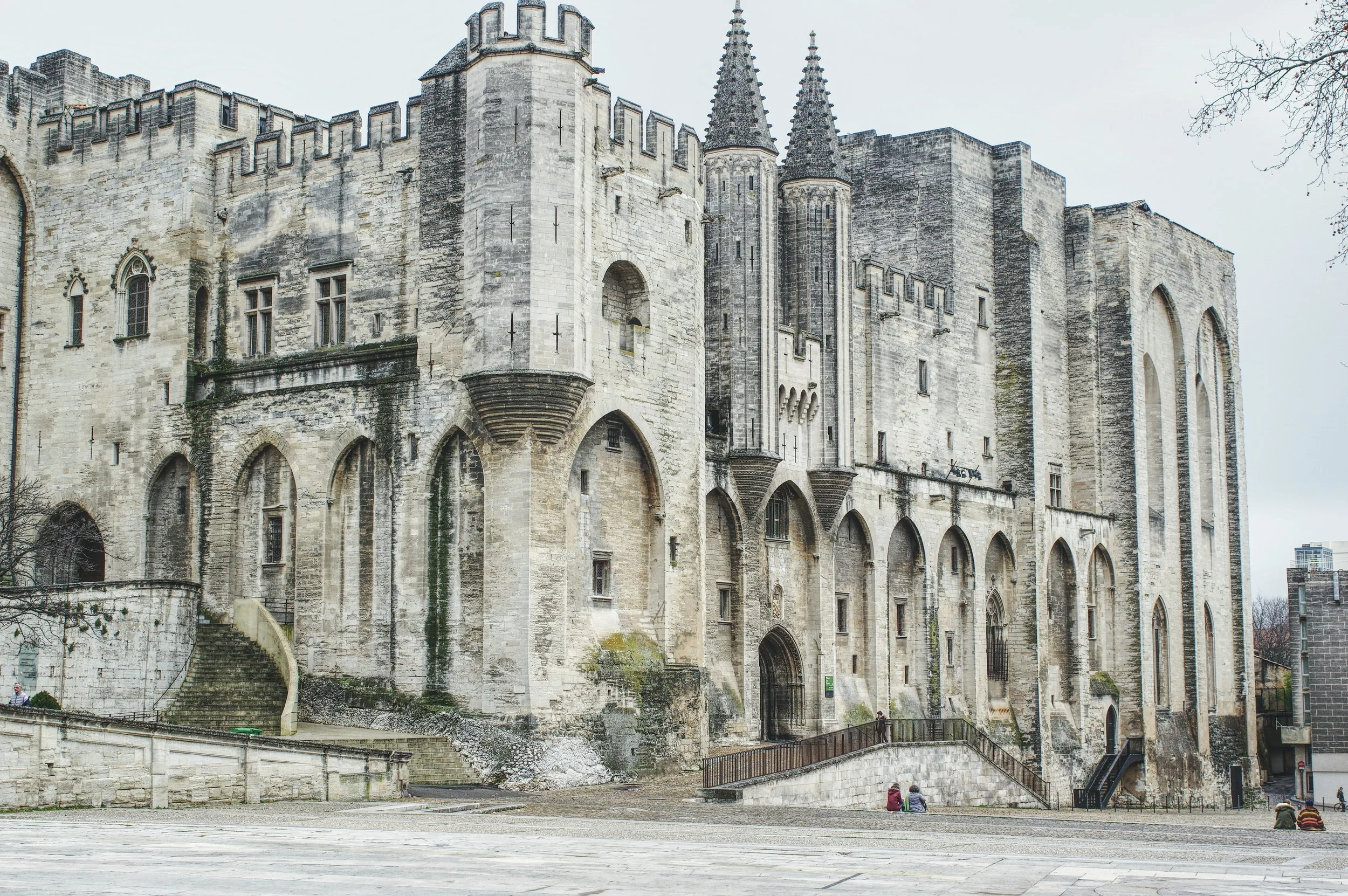
You can feel the age under your feet. These stones have carried armies, clergy, merchants, arguments, processions. And here I was, walking my dog on a lazy Saturday morning, coffee in the air, pretending I had somewhere specific to be.
It didn’t feel like tourism. It felt like discovery. Not in the grand sense. In the quiet one. The kind where you turn a corner and think, how is this just here?
And then, just as quickly, you step back into the present.
A few blocks from the Palais, an Italian deli window holds wheels of Parmigiano stacked like coins. Prosciutto hangs beside a handwritten sign arguing about olive oil. You can leave a 14th-century papal courtyard and five minutes later be ordering burrata. Students drift past on scooters.
A block away, a gallery door stands open. Someone adjusts a canvas in the morning light. The stone hasn’t changed. The city has.
Towers appear at the end of tight streets without warning. Courtyards open suddenly. Shutters hang slightly crooked above doorways that have seen more centuries than I can count. The place is imposing, but not hostile. It doesn’t perform for you. It simply exists.
And for a moment, it feels like yours.
We set out toward Les Halles.
Denise peeled off toward the first brocante like gravity had shifted. I made a show of pausing to admire the stonework on a doorway, a tactical maneuver designed to slow her momentum toward shop number two. “D, look at that,” I said, which in our relationship can mean genuine appreciation or strategic diversion, sometimes both.
The streets inside the walls don’t run straight. The first time I was there, I was convinced there had to be a pattern I wasn’t seeing. They loop and double back and head off in directions that don’t make immediate sense. It feels like there’s a password you haven’t been given yet. You think you’re headed one way and five minutes later you’re somewhere else entirely.
On Rue des Teinturiers, the old wooden water wheels turn beside the cafés, creaking along like they’ve been doing it forever. A boulanger slides a fresh tray into the case and the smell hits you before you see it. Butter and heat and something sweet enough to make you reconsider whatever plan you had. A man in a soft felt hat walks past with no particular urgency. Chairs scrape against stone as café owners set up for the day. Coffee hangs in the air, strong enough to pull you in without asking.
Somewhere along the way, I grabbed a small table on the patio at Tulipe and ordered a mimosa. It felt justified. Denise was about to be unleashed on a square full of shops. Sully stretched out under the table, head on his paws, ready for the next round of admirers. She made a beeline for the first shop, promising she’d only be a minute.
A café in Provence. A mimosa in front of me. Sully at my feet. This is what I live for.
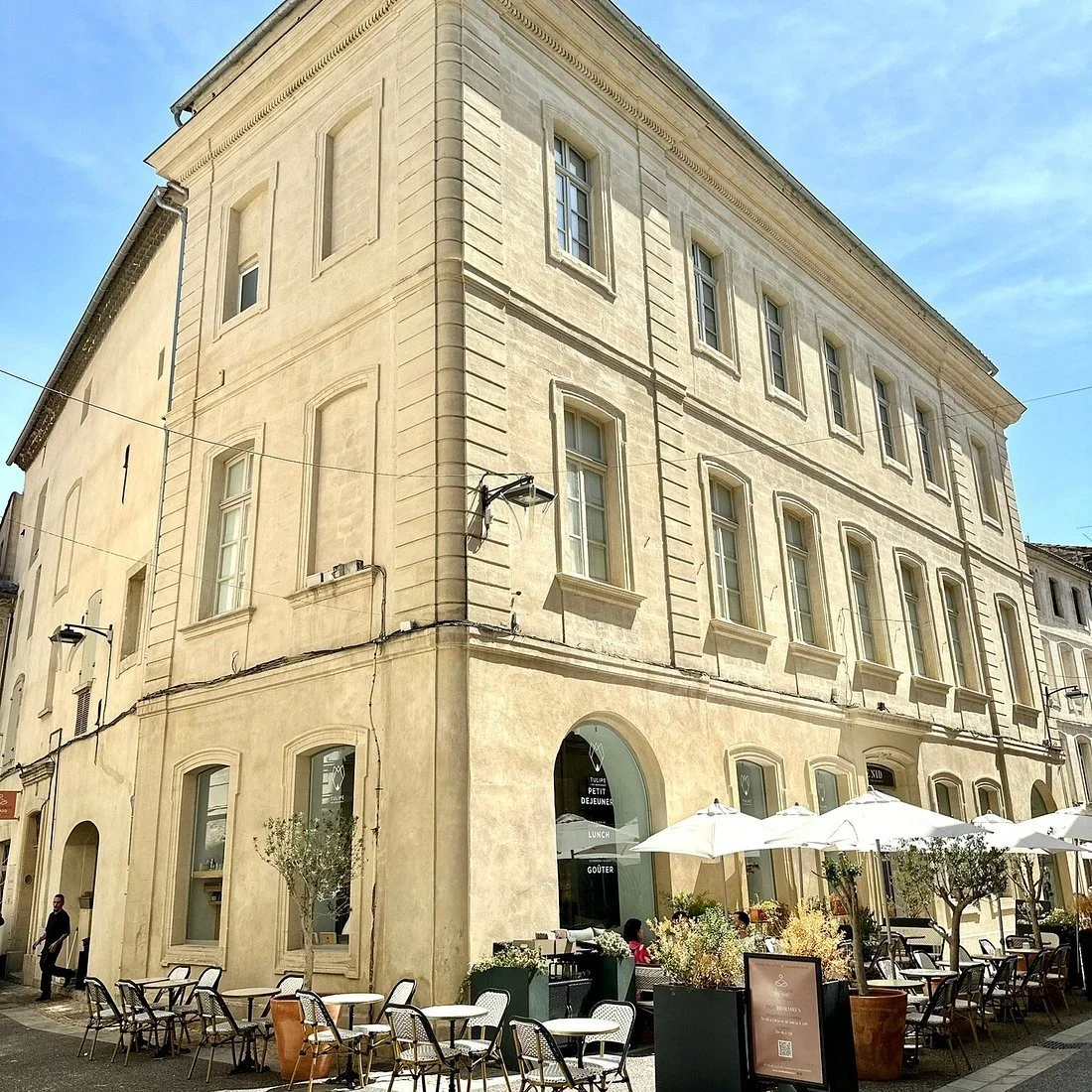
A woman positioned herself in front of a medieval doorway, adjusting her scarf, searching for the perfect photograph. A couple stood in the square arguing quietly over a map. A man leaned against a wall and watched the morning unfold like he had nowhere else to be.
As the morning begins to unfold, tourists spill toward the Pont Saint-Bénézet, determined to dance on a bridge that famously does not go all the way across the river. Street musicians set up in archways. Restaurant menus appear in five languages. The entire place hums with energy.
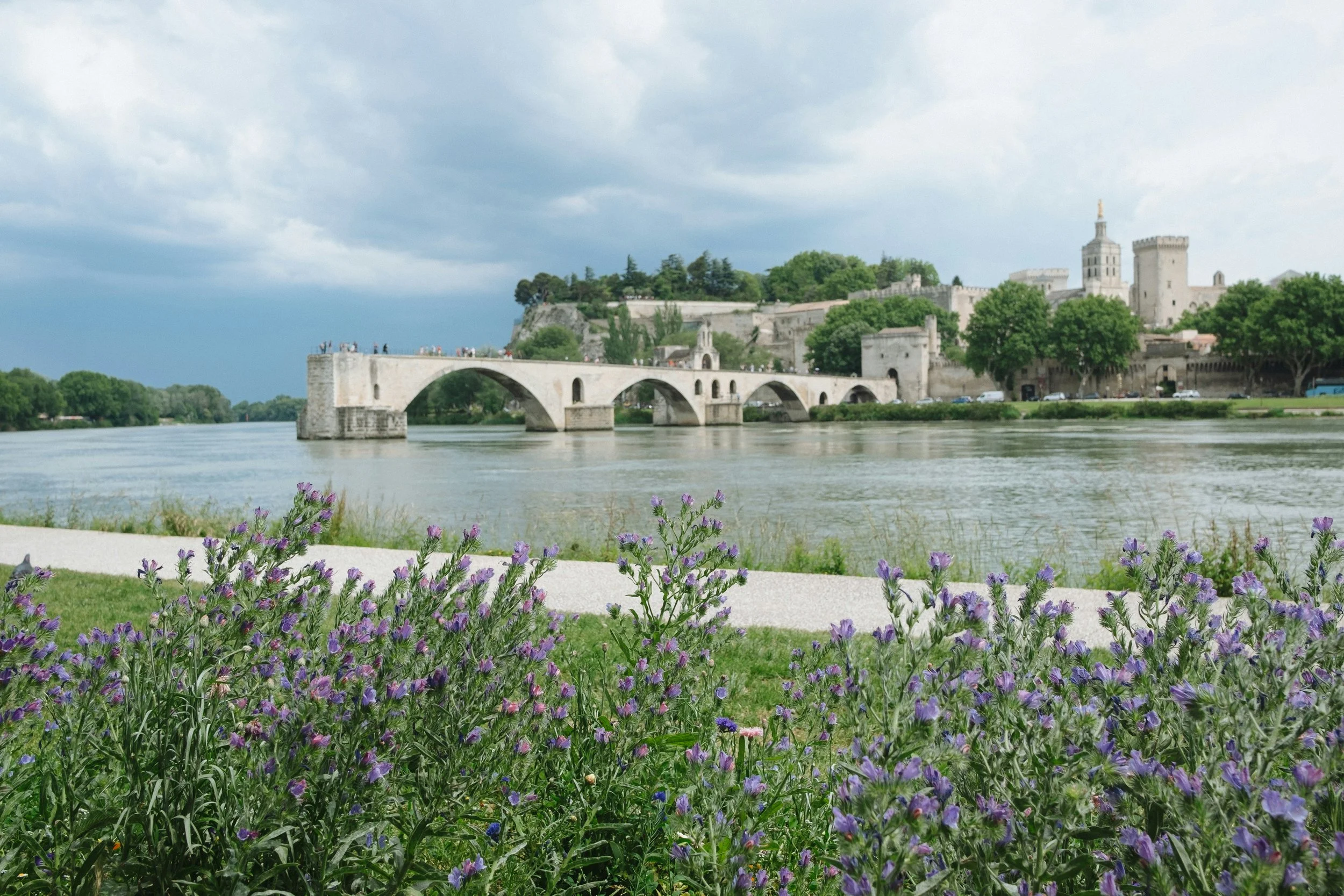
You feel that when you walk through the city. The density. The heat rising off the pale stone. The way the walls keep everything in like a bowl. By late morning, the stone begins to absorb the sun. The walls that once kept armies out now keep the warmth in.
If you climb up to the Rocher des Doms, the Rhône spreads out below and Avignon looks smaller than it felt from the street. The walls make more sense from up there. So does the river. You can see how the city tucks itself inside the stone and how the river sits just far enough out to offer more protection.
It’s strange, standing above something that once held so much power and then walking back down to argue about lunch. That’s Avignon. You can spend the morning brushing up against the 14th century and still end up debating whether you really need another ceramic bowl.
Eventually, we made it to Les Halles. By the time we reached it, the morning had already stretched into something more than errands. From the outside, the building wears a vertical garden like it is trying to soften its edges. Inside, it is pure movement. Fish counters gleam. Butchers work with quiet precision. There is a small bar in the center where people stand shoulder to shoulder with a glass of wine before noon, discussing nothing urgent as if it was perfectly reasonable to discuss dinner plans before lunch.
Sully couldn’t come inside, which meant, for once, I had full autonomy. No leash in my hand. No pacing near the door. He and D stayed outside. It was time for me and the market.
I moved through the aisles with the focus of a man provisioning for meals that deserved respect. This was the food all star game for me. The fish were bright-eyed. The tomatoes carried weight. A wedge of cheese demanded commitment. Bread cracked when pressed.
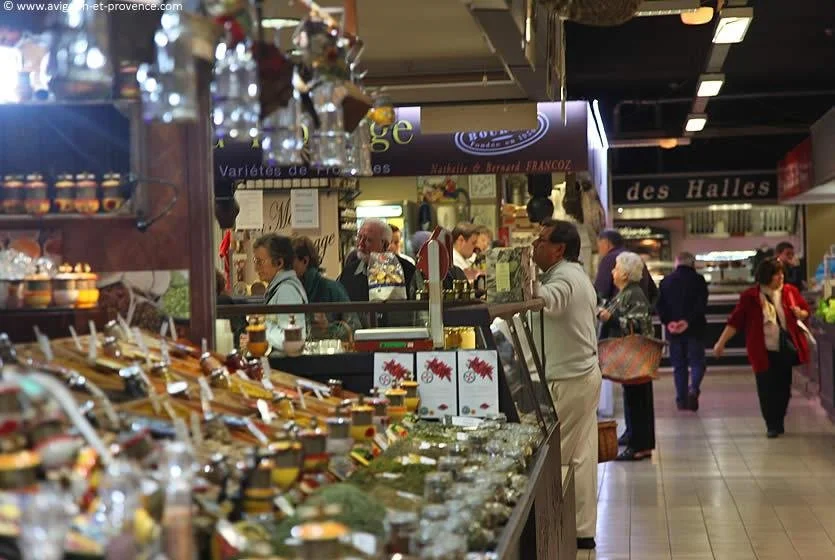
I ducked into a small spice shop just off the main aisle, the kind of place you could easily miss if you were in a hurry. Tins lined the walls. Glass jars held blends that smelled like heat and smoke and something older than either of those. I found a mix for lamb that felt almost unfair. Another for grilled vegetables that made me rethink what restraint meant. I bought more than I needed and felt justified.
I wasn’t shopping. I was assembling the next few days meals.
By the time I stepped back into the light, bags in hand, the morning had gotten away from us. The plan had quietly disappeared.
When we finally headed back, we had enough food for three days and a few more fragile objects that would now be riding with us for a while. The heat had started its slow climb. The city was fully awake now, louder, more crowded. We slipped out before I had to carry anything else.
And if the walls start closing in just a little, you cross the Rhône.
Villeneuve-lès-Avignon is just across the river, and you notice the difference right away. The streets are wider. Fewer crowds. Real houses instead of stone façades trying to impress you. If Avignon inside the walls feels like living inside a museum that serves espresso, Villeneuve feels like a place where you’d pick up your mail.
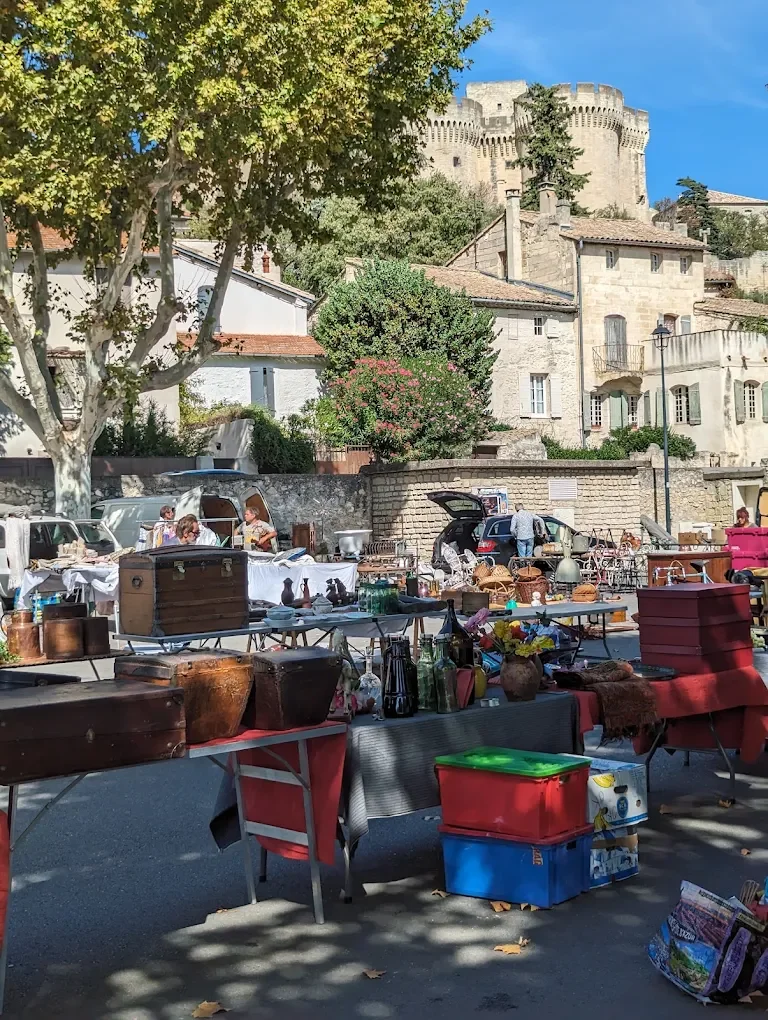
On weekends, the flea market across the river becomes its own form of sport. Tables of old linens, dented silver, heavy wooden furniture that looks like it once lived in a farmhouse kitchen. You can spend a Saturday there pretending you understand French antiques and considering whether you need another ceramic pitcher. It’s the kind of place that gets people thinking about a future life in France, one flea market find at a time. Me? I end up with a chair in my trunk.
If you’re thinking about settling in Provence, Avignon is a useful test. Spend two or three days inside the walls. See how you feel when the church bells ring and the streets narrow and the crowds thicken in July. Some people feel alive here. Others feel slightly boxed in.
What really makes Avignon livable, though, is the train.
The SNCF TGV station isn’t romantic, but it puts the rest of Provence and the South of France within easy reach. From Gare d’Avignon TGV, Paris is about two and a half hours. Lyon is simple. Marseille is half an hour. The Mediterranean isn’t far. That’s not poetic, but it matters.
If you’re thinking about living in France, high-speed rail matters more than lavender fields. A place that looks charming but leaves you stranded is different from one that connects you cleanly to the rest of the country. Avignon gives you both.
Avignon isn’t perfect.
In summer, the heat is serious. Not humid, but hot. During festival season, which lasts a month, posters and performers take over. Parking inside the walls becomes a competitive sport. And yes, it’s tourist-heavy because people want to see it. That’s part of it.
Avignon works if you like history close and trains nearby. It doesn’t work if you need total quiet or melt under the Provençal sun. You’ll know pretty quickly whether it’s your speed.
It doesn’t try to convince you. It just stands there, in stone, and waits.