
Lyon: An Unexpected Afternoon
"I think I want to run down to a brocante in Lyon."
The moment Denise said it, I started evaluating the degree of difficulty. Denise is much better with beauty and connection than she is with logistics. She can walk into a room and immediately notice the one interesting painting on the wall, the colors that would have worked better, or the antique table everyone else overlooked. Ask her where she parked the car twenty minutes ago and the results become less predictable.
A long time ago, I promised her parents I would take care of their daughter. Since then, I have interpreted that promise broadly. I should have simply nodded. Instead, before I could stop myself, the words came out.
"You want me to go with you?"
There it was. The look. The same look a fisherman gets when he feels the hook set.
"If you want," she said.
"Sure," I said like I was making a sacrifice.
The truth is, I love exploring France. And if you care about food, Lyon occupies a near-mythical place in the French imagination.
Americans tend to think Paris sits at the center of everything. There is also Provence and the Riviera. To the French, Lyon is their gastronomic capital. Mention Lyon to someone in France and the conversation usually turns to food. The city is famous for bouchons, markets, and long lunches. Generations of chefs like Paul Bocuse have helped build the city's reputation. While Paris may be where France puts on the show, Lyon is where many French people believe the real cooking happens.
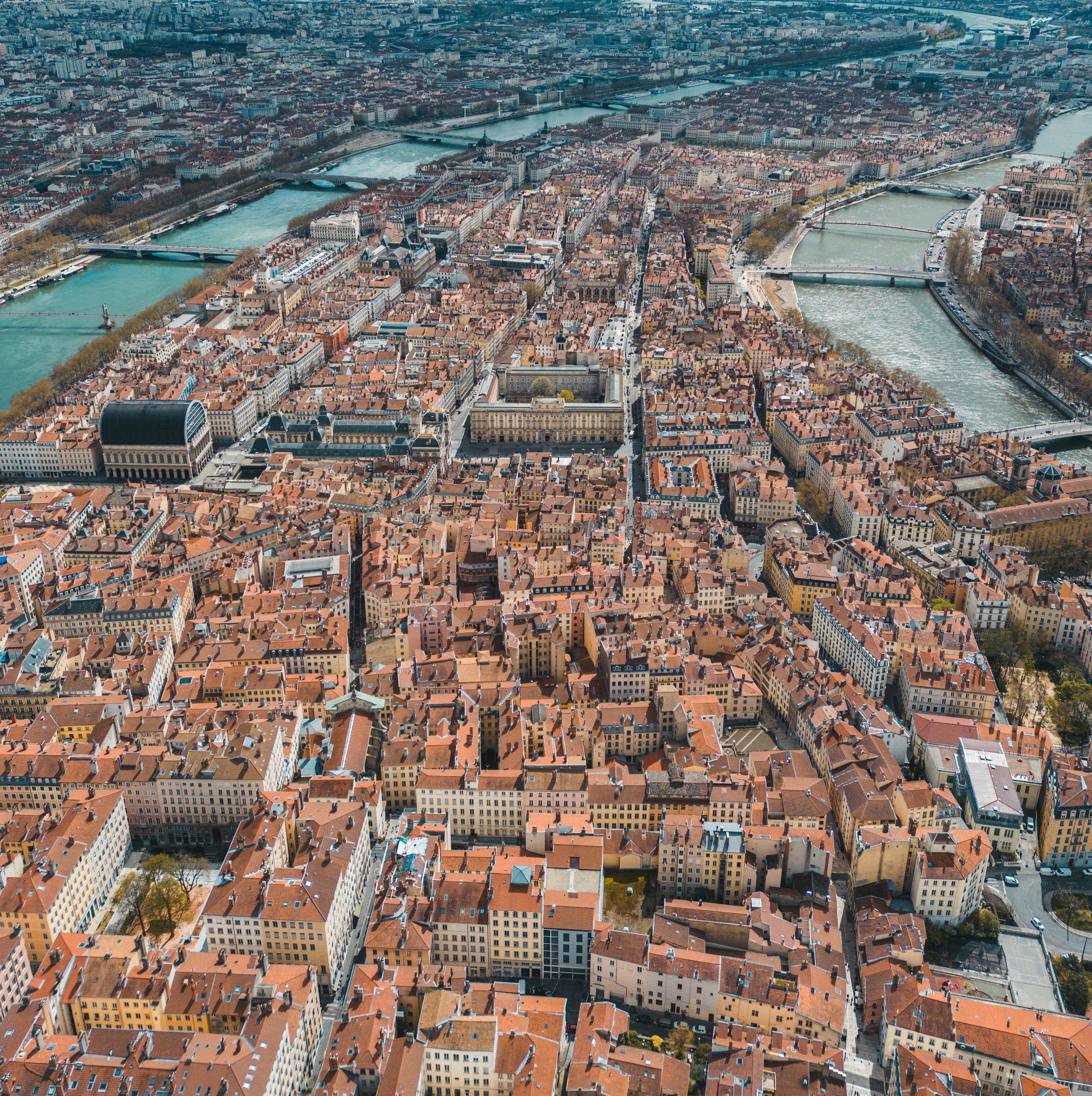
I’d never been there. Now, thanks to Denise and her visit to a brocante, I was about to.
Lyon was less than two hours away. We only had Sully with us at the time. Viggo had not yet entered our lives to turn every outing into a full-contact sporting event. It sounded easy enough.
In my mind, the day was already mapped out. Denise would browse a few antiques while Sully and I found a shady café, ordered a burger and a beer, and enjoyed an afternoon in one of France's great food cities. At some point my phone would buzz and I would go find Denise, who would inevitably be trying to figure out how to fit her latest discovery into the car.
A couple hours later, we would point the car back toward Burgundy and call it a successful day. It was a good plan.
The day before we left, I looked up the brocante to get some directions. It was called Les Puces du Canal, whatever that meant. Until that moment, I had been operating under the assumption that Denise wanted to visit a brocante. The kind of place where you wander around for an hour, buy something you don't need, and convince yourself it was a bargain because it was old.
What I discovered was that Denise wasn't going to a brocante. She was going to the brocante.
Les Puces du Canal is one of the largest flea markets in France. Hundreds of dealers spread across warehouses, courtyards, and stalls. They were filled with furniture, art, linens, architectural salvage and antiques. If an object had managed to survive the last two centuries in France, there is a reasonable chance it would eventually pass through Les Puces du Canal.
If she was about to spend several hours exploring one of the most famous brocantes in France, a burger and a beer suddenly felt like a waste of a perfectly good afternoon in Lyon.
Until that moment, my role had been simple. Be a good partner. Drive to Lyon. Make sure Denise arrived safely. Kill an hour or two with Sully. Drive home.
Now my brain started doing math. Two hours would be optimistic. Three seemed more realistic. If Denise found antique pottery, all estimates would go out the door. The more I read, the worse it got.
This wasn't a quick stop. This was the Indianapolis 500 for people who get excited about eighteenth-century armoires.
As the scale of the place sank in, so did another realization. Denise was not going to be thinking about me, Sully, or lunch for quite some time.
What was I going to do? Maybe I track down something noteworthy to eat?
Then it hit me. For months, I had been trying to make what the French call an omelette baveuse. Jacques Pépin makes it look effortless. A few flicks of the wrist, a little butter, a couple of eggs, and ninety seconds later he is holding what appears to be a work of art.
My own results had been less impressive. By that point, I had successfully transformed roughly fifty attempts at a French jambon et fromage omelette into just another ham and scram.
And somewhere along the way I had heard that if you wanted a proper French omelette baveuse, Lyon was the place. And for sure that sounded like a better plan than a burger and a beer.
An omelette baveuse, for those unfamiliar with the term, translates roughly as "slightly drooling." Which admittedly sounds less like a culinary achievement and more like a medical condition.
Another thing. In France, an omelette isn't even for breakfast. A typical French breakfast is an espresso, a croissant, and a cigarette. The French eat omelettes for lunch or dinner.
An omelette is all about technique. A great one requires precision, timing, and a light touch, with very little room for error. There are only a handful of ingredients and nowhere to hide mistakes. Before a chef is trusted with the complicated stuff, the French want to know what he can do with eggs and butter.
The first time an American sees one, the reaction is often the same.
"That's not done."
The plan was simple enough. Find the omelette. Eat the omelette. Then wander around until Denise called. My destination was Café du Jura, a traditional bouchon about twenty minutes away.
The drive felt slightly reckless. Not because of traffic. Because I was making assumptions about time. If Denise somehow emerged from the world's largest flea market after forty-five minutes, I was going to look very foolish.
But some risks are worth taking. An omelette was waiting.
We pulled into Lyon early that morning and followed the signs toward Les Puces du Canal. The closer we got, the more obvious it became that this wasn't someone's weekend antique market. It looked more like an industrial park that had been taken over by people who couldn't stop buying old furniture.
Cars streamed in from every direction. Dealers were unloading vans. Entire dining room sets sat in parking spaces waiting for new owners. Long rows of warehouses stretched into the distance, each one filled with antiques, art, lighting, linens, and enough French furniture to decorate a small village.
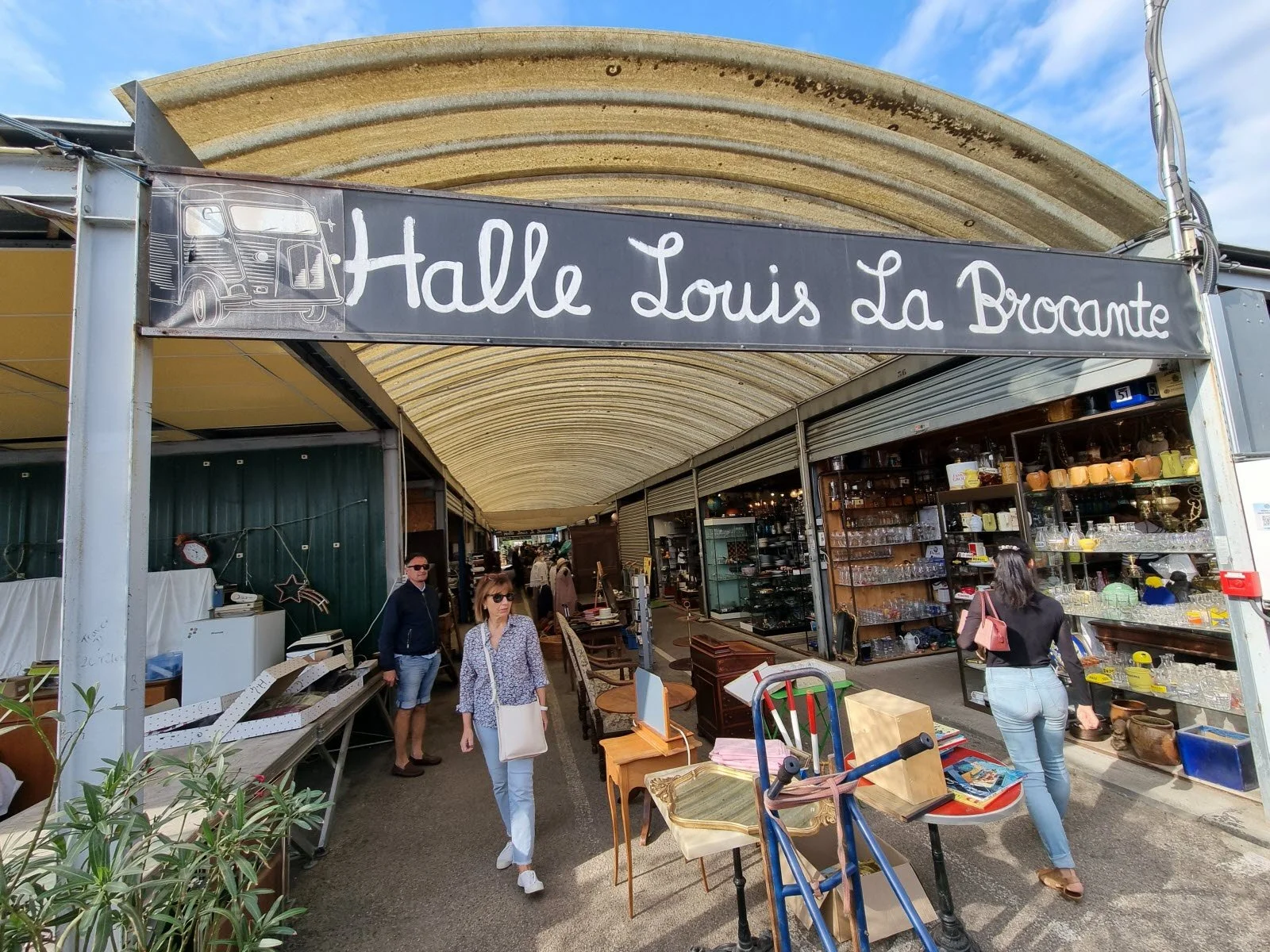
I pulled over near the entrance and looked at Denise.
"You're going to be a while, aren't you?"
She just smiled.
Then she climbed out of the car with the look of someone who had just been handed an unlimited gift card.
I watched her disappear into the crowd.
Sully climbed into the passenger seat. "Well," I said, "let's go find an omelette."
While Denise vanished into what looked like an antique city unto itself, I pointed the car back toward the center of Lyon.
Driving into Lyon, I was immediately struck by how different it felt from Paris. Instead of spreading endlessly across a flat landscape, Lyon seemed to rise and fold around two rivers. Hills appeared where I wasn't expecting them, neighborhoods climbed the slopes, and no matter where I looked there always seemed to be another church perched above the rooftops.
The city somehow felt grand without ever feeling intimidating. Elegant nineteenth-century buildings stand shoulder to shoulder with neighborhoods that look as though they've been growing up the hillsides for centuries.
Every so often I would look up and there it was again, the Basilica of Notre-Dame de Fourvière sitting high above the city like it was quietly keeping an eye on everything below.
By the time Sully and I arrived at Café du Jura, I was fully committed to the mission.
When the omelette arrived, my first thought was that it looked almost too simple. A thin blanket of pale yellow egg wrapped around melted Comté and ham, with barely enough color to let you know it had ever touched a pan. No unnecessary garnish. No artistic drizzle. Nothing demanding my attention beyond what was on the plate.
I cut into the center and immediately understood what I had been getting wrong.
The outside was impossibly delicate, just firm enough to hold everything together, while the middle remained soft, creamy, and rich without feeling undercooked. Every bite tasted of butter, eggs, and Comté, each ingredient doing exactly what it was supposed to do and nothing more.
It wasn't flashy or trying to impress me. It was simply the best omelette I had ever eaten. Which, I was beginning to suspect, was the entire point.
But what I failed to appreciate was just how quickly you eat an omelette. Even a very good one.
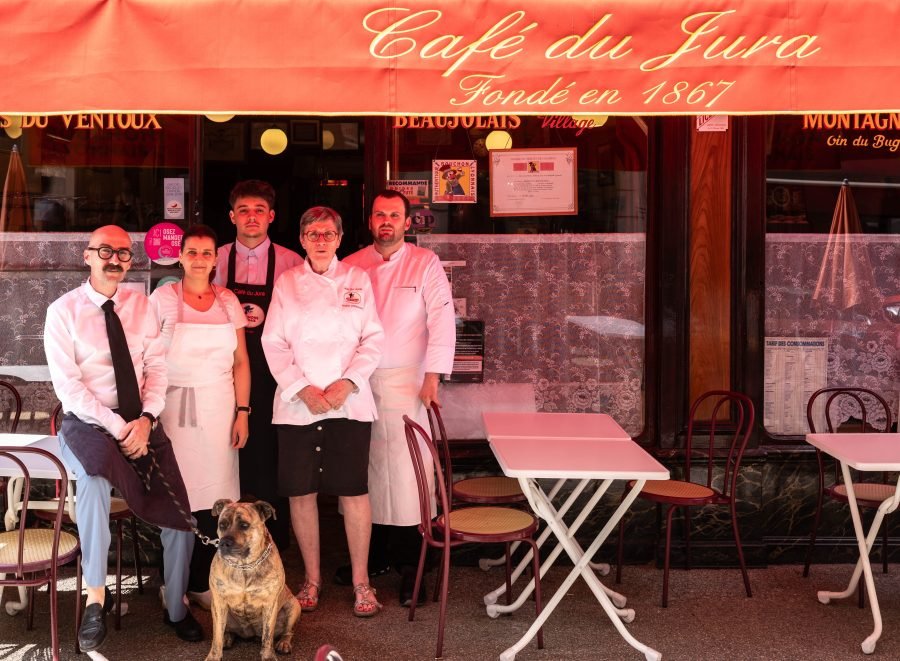
Forty-five minutes after arriving in Lyon, Sully and I were sitting outside Café du Jura with an empty plate in front of us. I felt slightly ridiculous. I had obsessed over an egg, ate it, and now I had absolutely nothing to do while Denise was somewhere inside a giant flea market happily lost among centuries of furniture.
I checked my phone. Still nothing.
Of course there wasn’t. She was probably deep in negotiations over some nineteenth-century armoire, completely unaware that I had already eaten the best omelette of my life and was now just… sitting there.
With time to kill, I pulled out my phone, and went into the google to read more about Lyon. One thing quickly became clear: this wasn’t a city that became famous because of food. It had been important for nearly two thousand years.
The Romans built it where the Rhône and Saône rivers meet, turning it into one of the most important commercial cities in Gaul. Centuries later, Lyon became Europe's silk capital. At its peak, tens of thousands of people worked in the silk trade, producing the fabrics that dressed French royalty and eventually much of Europe's aristocracy. The wealth from that industry helped shape the elegant city that still exists today.
During World War II, Lyon earned another distinction as a center of the French Resistance, a history the city still carries with quiet pride. Only later did chefs like Paul Bocuse help cement Lyon's reputation for food.
As I sat there, another memory drifted back. One of those odd little things that had been sitting somewhere in the back of my mind for years, just waiting for the right moment to become useful.
Years earlier, I had watched an episode of Anthony Bourdain in Lyon, and for some reason one scene had stayed with me. But what I remembered wasn't the restaurant, it was the scene.
It was barely breakfast by American standards, yet people were already gathered around long tables drinking wine, singing, laughing, and eating what had traditionally been hearty meals for silk workers and laborers finishing the morning's work. It looked less like a restaurant than a weekly ritual.
I couldn't remember the name of the place. So I went back into the google. A few seconds later, I found it.
Bouchon Comptoir Brunet.
I looked at the map. A four-minute walk. Holy crap. I looked down at Sully. "Sully," I said, "I think we’ve found something else to do."
Ten minutes later, Sully and I were standing in front of Bouchon Comptoir Brunet. It wasn't trying to impress anyone.
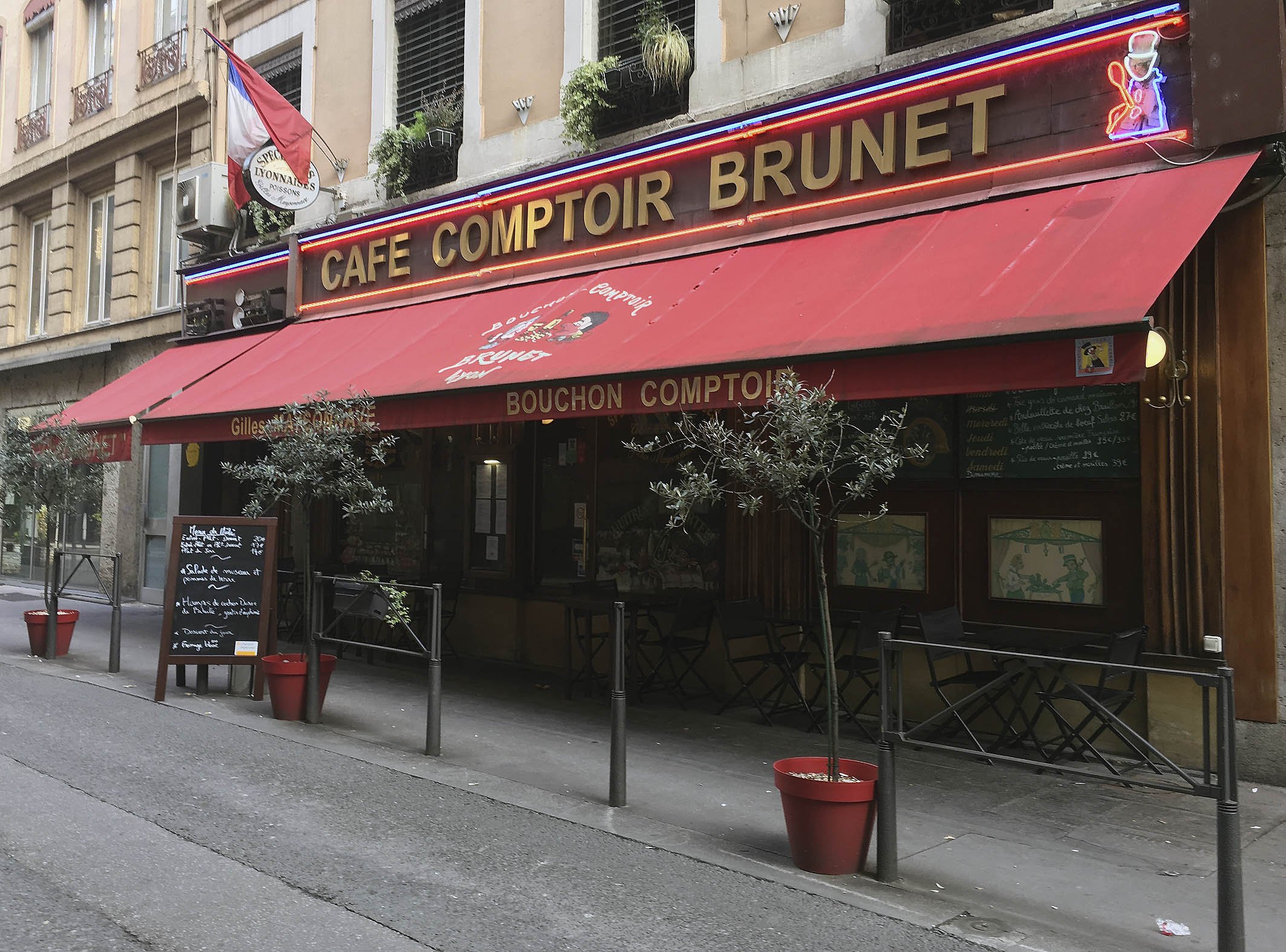
If I hadn't known the story, I probably would have walked right past it. A classic Lyon bouchon with weathered wood, red awnings, a few small tables outside, and a dining room that looked like it had been serving lunch for generations. No gift shop. No photographs of famous visitors covering the walls. No sign suggesting Anthony Bourdain had ever set foot inside. It was just another neighborhood restaurant.
Inside, a small lunch crowd was finishing their meals. A few conversations drifted across the room. Plates clinked. Glasses of wine sat half empty on tables covered with red-and-white checkered cloths. Nothing like the scene I remembered from television.
I briefly considered going inside for another lunch. But I had already eaten an omelette with enough butter for a thousand pancakes, and Sully looked more interested in stretching his legs than watching me order again.
A walk sounded like the better plan.
So we wandered.
The river wasn't far away. It was a great fall day for a walk and I needed to walk off a potential food coma. Sully stopped every few feet to catch up on the neighborhood news while I watched Lyon go about its day. People nursed a late coffee. Others sat along the river with a glass of wine. A few vendors had set up tables with old books, prints, and bits of forgotten France that looked as though they had escaped Les Puces and wandered into the city.
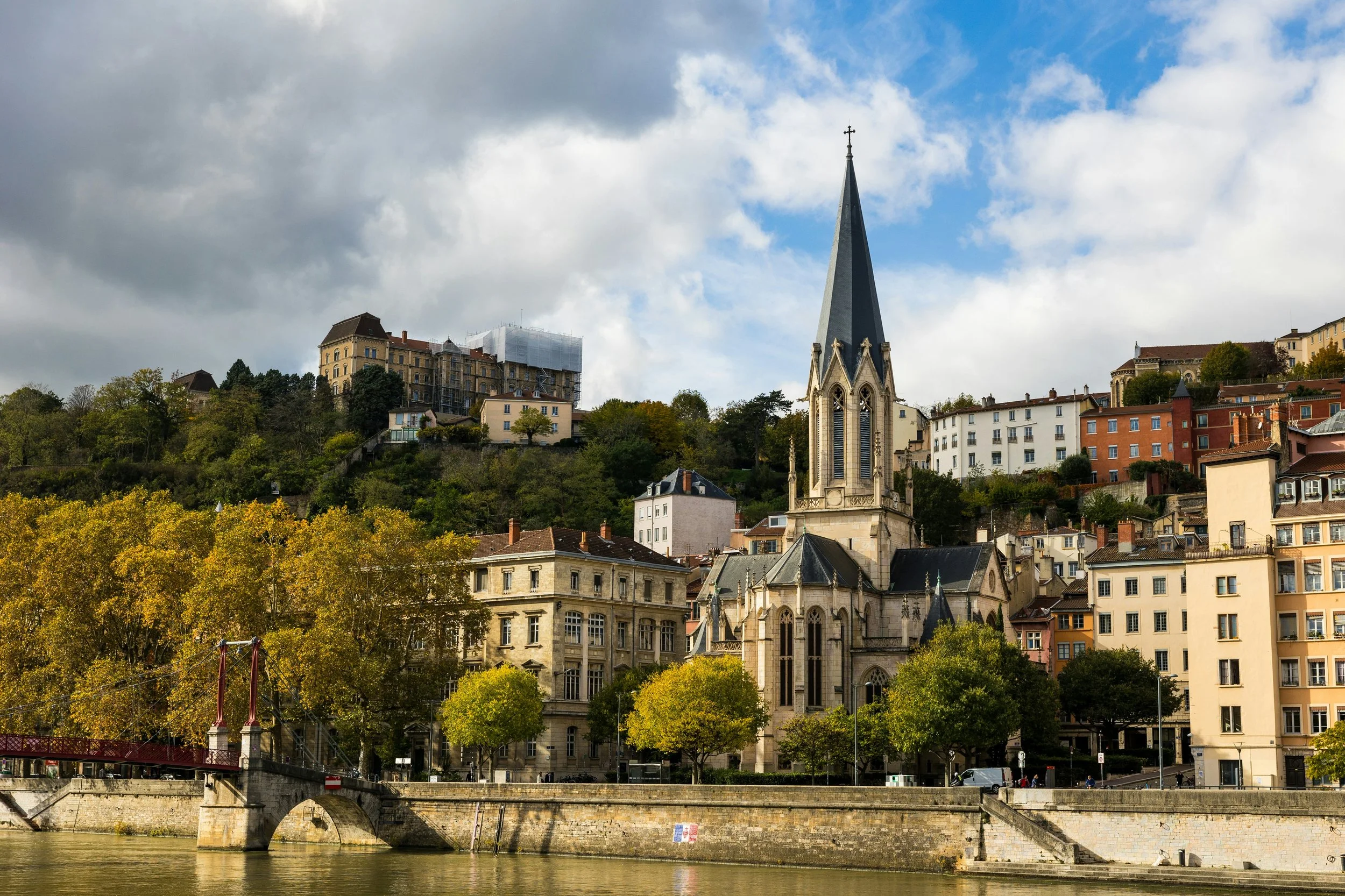
Sully inspected every tree, every lamppost, and every interesting smell with the seriousness only a Golden Retriever can bring to the job. I admired the old façades reflected in the water and wondered why more American cities hadn't figured out that rivers were meant to be enjoyed rather than driven past.
After watching enough other people enjoy themselves, it seemed rude not to join them.
A few minutes later, Sully and I turned onto one of those narrow Lyon streets where you almost expect to find a good wine bar. We found one called Muraato. A handful of tables sat outside, people lingered over glasses of wine, and nobody seemed to be in much of a hurry.
Inside, Sully immediately claimed the cool tile beneath the table while I settled into a chair.
I still hadn't heard from D, but Muraato was exactly what I needed: a quiet place to sit, a glass of wine, and absolutely nothing left to accomplish. I had somehow stumbled into one of those travel afternoons you could never plan.
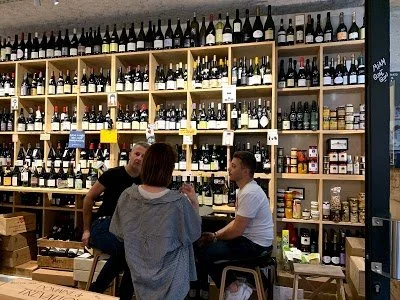
A few minutes later, a woman walked over and gently set a glass of wine in front of me.
At that exact moment, my phone rang. "Hey," Denise said. "I'm ready."
I looked at the untouched glass sitting in front of me. At best, I was twenty minutes away.
"I'll be there as fast as I can," I said.
I looked at Sully. We both knew there wasn't enough time to do this properly. I chugged it, put a ten on the table, and we headed for the car.